

Limited Time Offer: Receive your special introductory 50% OFF discount when you order now!
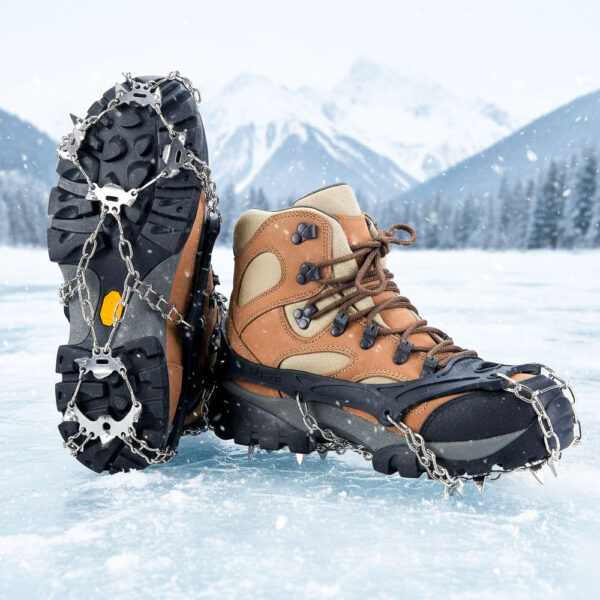
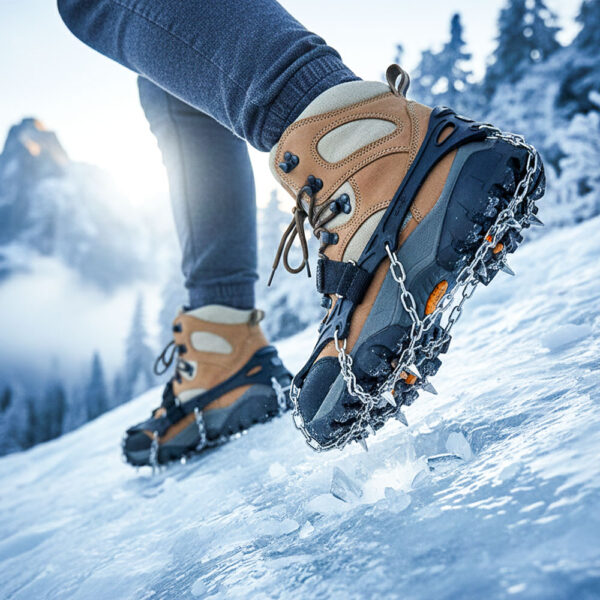
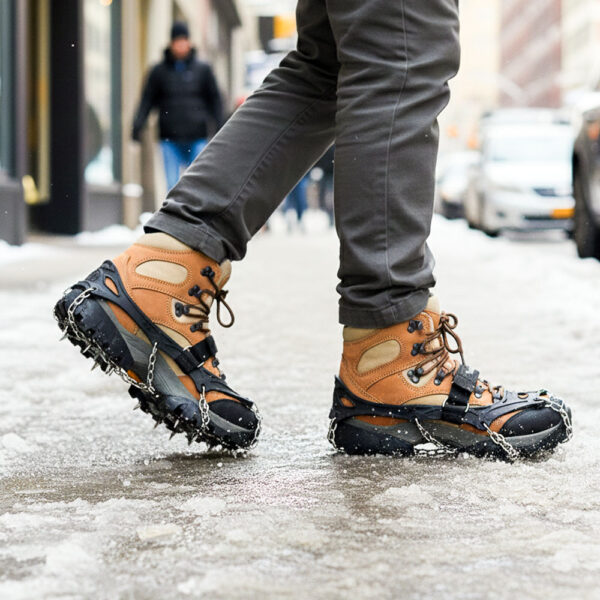
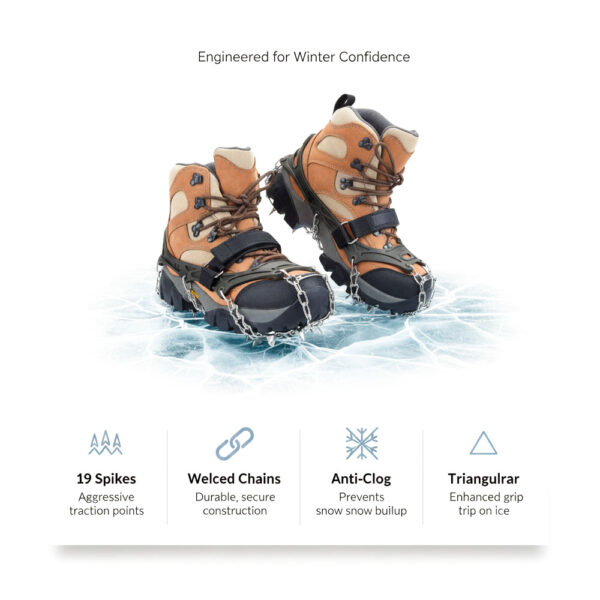
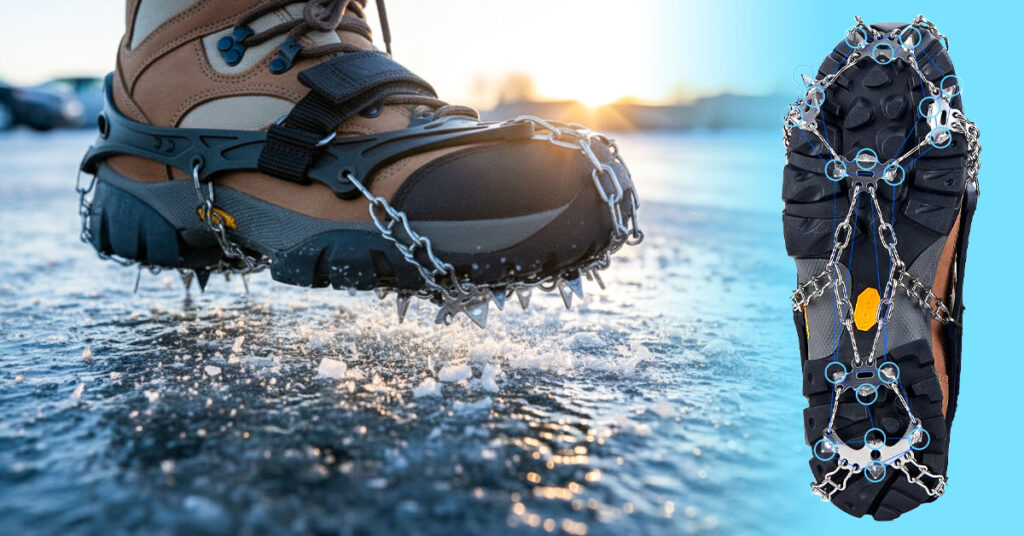
Most ice cleats give you 10-12 spikes and hope for the best. This design features 19 strategically placed stainless steel spikes that create multiple contact points with every step. The moment your foot hits the ground, these spikes dig in and lock you to the surface. Whether you're crossing a frozen parking lot or hiking up an icy trail, you get immediate traction without that scary sliding sensation. More spikes mean more security, plain and simple.
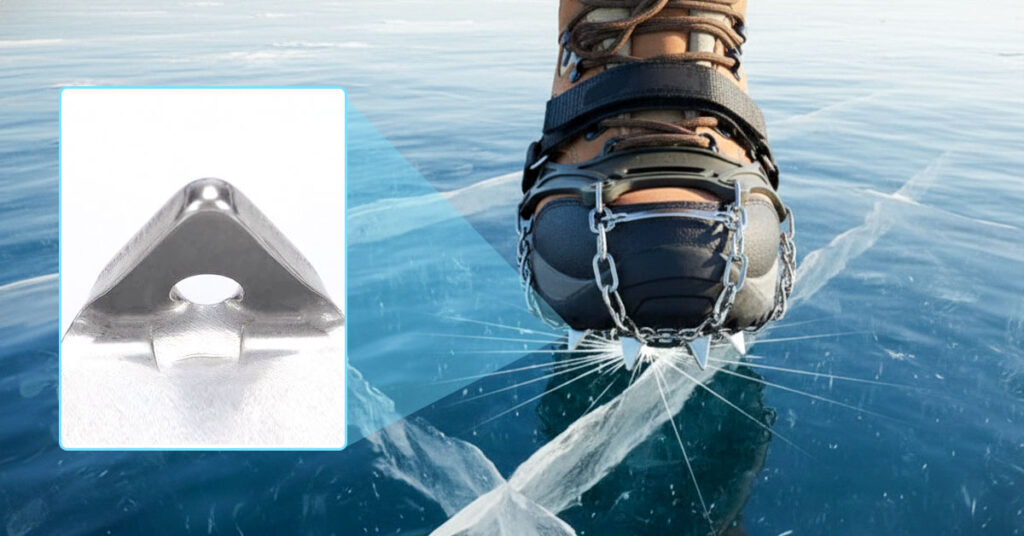
Round spikes can bounce off hard-packed ice, but these triangular spikes are designed differently. The three-sided geometry creates sharp edges that cut into frozen surfaces like a knife through butter. Even on that slick, glassy ice that forms after freezing rain, these spikes find purchase. The shape isn't just for show—it's engineered to break through the toughest conditions when regular spikes would fail you.
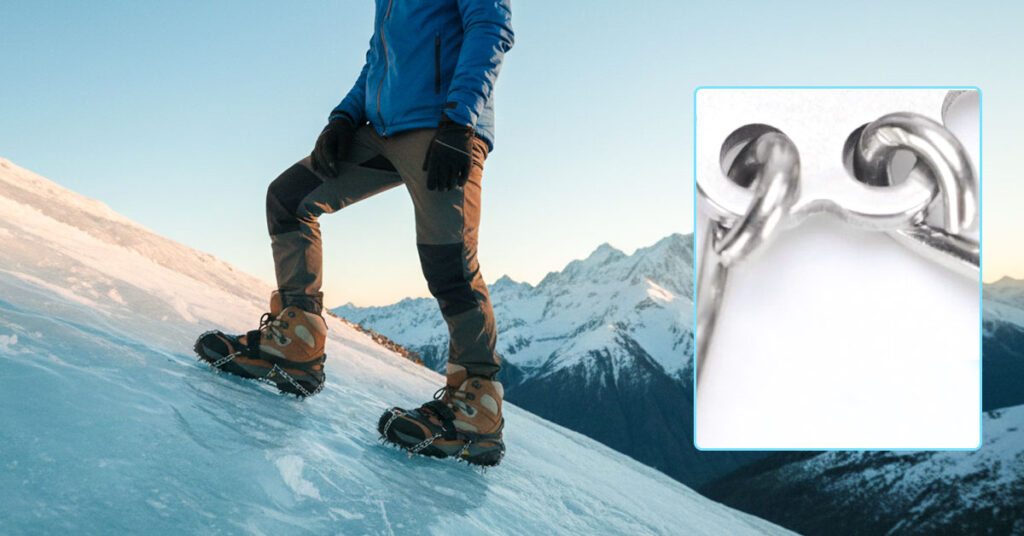
Here's what makes this different: six double chains wrap around your boot and connect every spike together. They're welded, not just linked, so there's no weak point that can pop open. When you step on uneven ice or take a corner, these chains keep your foot from sliding sideways—that's usually when people fall. The chain network distributes force across the entire crampon, so one spike doesn't take all the pressure and fail.
Slipping on ice sends thousands of people to the emergency room every winter—broken wrists, hip fractures, concussions. This isn't about being cautious; it's about actual protection. With proper traction underfoot, your body doesn't have to constantly tense up and overcorrect. You walk naturally instead of that awkward penguin shuffle everyone does on ice. Less slipping means fewer falls, and fewer falls means you stay healthy and active all winter long instead of recovering from an injury.

Superb Quality
Our products are crafted with premium components to ensure superior quality and long-lasting durability.

No-Hassle Returns
If you are not satisfied with your product, you can return it within 30 days of purchase for a full refund.

Quick Delivery
Get your product delivered straight to your home. It’s simple to use and requires virtually no set up!

Your purchase on this site is 100% secure as we use security protocols that ensure complete reliability, secrecy, and confidentiality of your data. Our SSL certificate ensures that there is no room for intruders to invade, meaning your data is always protected when you shop with us!
Yes, the steel spikes will absolutely scratch and gouge hardwood, tile, and laminate floors. Get in the habit of removing them at the door—they fold flat in seconds and fit in the included bag. Many people keep the bag hanging by their front door as a visual reminder. If you do walk inside accidentally, stay on rugs or carpet and remove them immediately to minimize damage.
Check the spike length every few weeks if you use them regularly. When the spikes wear down to less than 5mm (about the thickness of two quarters stacked), they're losing effectiveness. You'll also notice reduced traction—if you're slipping in conditions where you used to feel secure, that's a sign. Walking on concrete or asphalt wears them faster than snow and ice. If you use them daily on mixed surfaces, expect 1-2 winters of life. Occasional use on pure ice can last 3-4 years.
Yes, completely normal. The TPE rubber and silica gel materials have a distinct odor when new, similar to new tires or rubber mats. Leave them outside or in a garage for 24-48 hours and the smell dissipates significantly. Don't store them in an enclosed car on the first day—the smell can be overwhelming in a small space. After a few uses in cold air, you won't notice it anymore. The smell doesn't indicate any safety issue; it's just off-gassing from the manufacturing process.
If the velcro won't stay, you're likely not stretching the rubber portion tight enough before securing the straps. Here's the proper method: stretch the crampon over your boot until it feels snug all around, then pull the velcro strap VERY tight—tighter than seems comfortable—and press firmly to secure. The strap should feel almost too tight at first; it will relax slightly as you walk. Also check that you're not getting snow or ice buildup on the velcro itself, which prevents it from gripping. Some people find that wrapping the strap around twice gives extra security. If it's still loosening, the crampon might be too large for your boot size.
Aggressive boot treads help in snow and soft conditions, but they're nearly useless on actual ice—the rubber simply can't grip a slick frozen surface no matter how deep the lugs are. Think about it: your car has treaded tires, but you still need chains or winter tires on ice. The metal spikes literally penetrate the ice surface, which rubber cannot do. Even the best mountaineering boots with Vibram soles need crampons for icy terrain. Your treaded boots are great for the approach, but once you hit ice, you need metal touching the surface.
First, clean them thoroughly—rinse off any salt, dirt, or debris and let them dry completely. Storing them wet is asking for rust. Once dry, put them in the included bag and store in a cool, dry place. Avoid extreme heat like attics or sheds that get over 100°F, as this can degrade the rubber. A basement, garage, or closet works perfectly. Don't store them compressed under heavy items—let the rubber maintain its shape. Some people spray the chains lightly with WD-40 or silicone spray before storage to prevent rust, though the stainless steel shouldn't rust much anyway. Check them at the start of next winter to make sure the rubber hasn't cracked.
These aren't designed for running—the chains and spikes create an unstable platform at running speeds, and you risk ankle injuries from the uneven distribution of weight. For winter running on icy paths, you want specialized running traction devices with smaller, more numerous studs that allow your foot to flex naturally. These crampons are built for deliberate walking and hiking where you're placing each foot carefully. If you try to jog in them, the chains can shift, spikes can catch on each other, and the whole system becomes a tripping hazard. Stick to walking pace, and look into trail running spikes if you want to maintain your running routine.