There's a memory that sits quietly in the back of your mind. You don't think about it often, but when you do, it stops you cold.
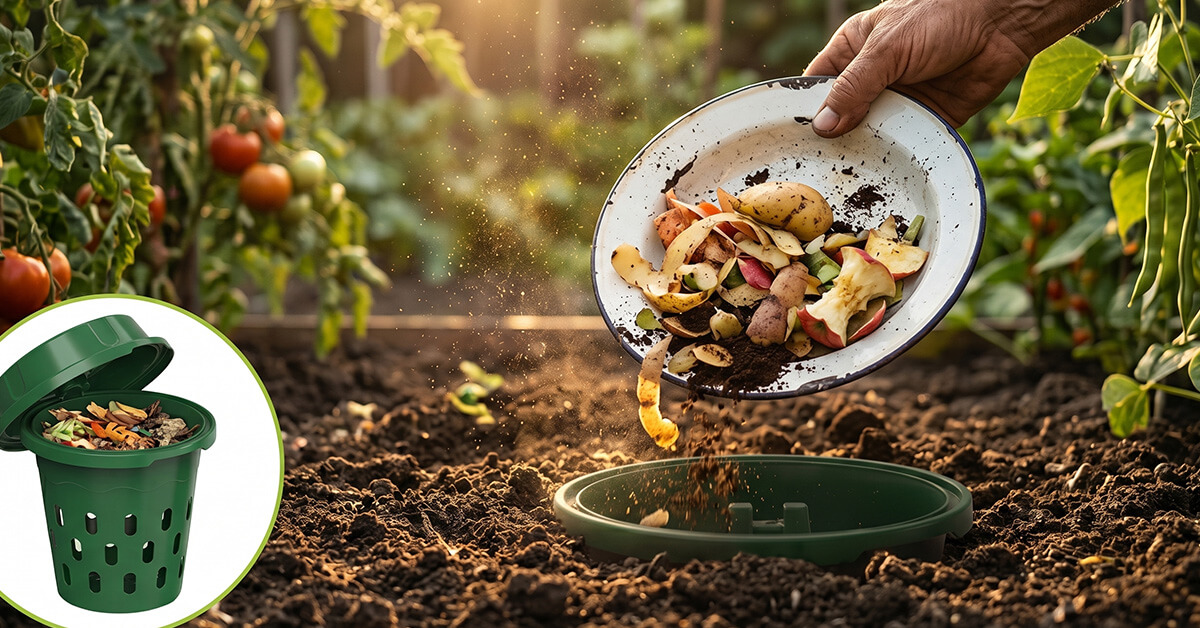
A pair of weathered hands scraping potato peelings off a plate. A short walk to the edge of the vegetable patch. A shallow hole, already half-filled with yesterday's coffee grounds and last night's apple cores. The scraps go in. A thin layer of soil goes on top. No ceremony. No fuss. Just a thing that gets done, the way breathing gets done.
And every spring, that soil came alive.
Dark as chocolate. Rich as anything money could buy — except nobody bought it. It just happened. Because that's what your grandfather knew. That's what your grandmother knew. That the earth gives back exactly what you put into it, if you let it.
For decades, this was just how people lived. Nobody wrote blog posts about it. Nobody called it "sustainable living." It was Tuesday.
So why does it feel so hard to do it now?
He Spent 30 Years Buying What His Grandfather Made for Free
Robert is 72. He lives outside Bristol, in a semi-detached with a back garden that gets decent sun from about 11 onward. He's been gardening since he retired — tomatoes, runner beans, the odd courgette that gets away from him and grows to the size of a small dog.
But the soil has never been right.
He buys bags of compost from the garden centre every March. The expensive kind, because the cheap stuff is mostly bark and broken promises. He mixes it into his beds, waters it in, and waits. The results are fine. Not bad. Just… fine.
"My grandfather never bought a bag of compost in his life," Robert said. "Not once. And his carrots were the best I've ever tasted. I'm 72 years old, and I still haven't grown a carrot that comes close."
He tried traditional composting bins — the big black plastic ones the council sells for a discount. Twice. The first time, it turned into a wet, stinking heap that attracted rats. The second time, he forgot to turn it for 6 weeks, and it just sat there doing nothing, like a sullen teenager.
"I knew the principle," he said. "Bury the scraps, let the worms do the work. That's what I watched my granddad do a thousand times. But I couldn't seem to get it right with these modern contraptions."
The gap between what he remembered and what he could actually manage in his own garden — that gap bothered him more than he let on. Not because of the tomatoes. Because of something deeper. Something about losing a thread that connected him to a man who'd been gone for 40 years.
The Soil Remembers What We Forgot
Here's the thing about those old market gardeners, the ones who kept half of England fed through 2 world wars and never once set foot in a garden centre:
They didn't compost above the ground. They composted in it.
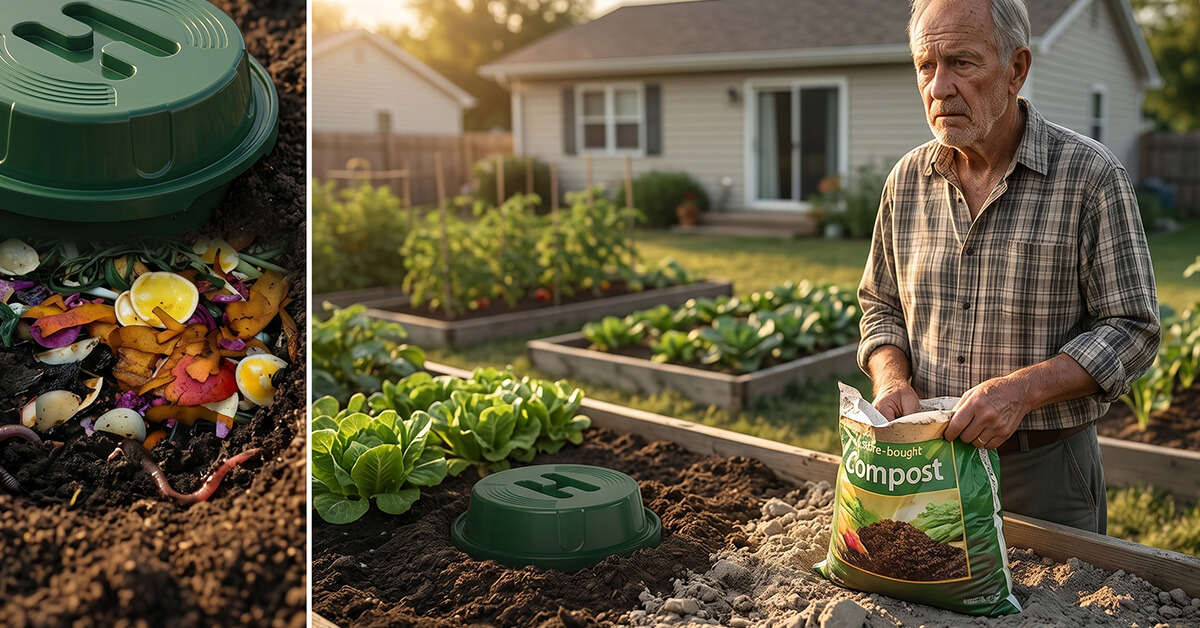
Scraps went directly into the soil. Worms came up to meet the food. The composting happened right there, in place, surrounded by the roots that would eventually feed on it. No turning. No tumbling. No thermometer stuck into a heap to check if it's "cooking." The ground itself was the system.
Modern composting went wrong when it moved everything above ground and turned a simple act into a project. Suddenly you needed a dedicated bin, a schedule for turning, a carbon-to-nitrogen ratio, and the patience of a monk. It works — for people who enjoy that sort of thing. But for anyone who just wants dark, living soil and a garden that gives, it's an unnecessary detour.
The old way was simpler. And it worked better.
Not because those old gardeners were smarter. Because they understood something we've been taught to overcomplicate: the soil already knows what to do. You just have to feed it.
A Small Green Bin That Works the Way Your Grandfather Did
The GreenNest Inground Worm Composter isn't a revolutionary invention. It's closer to a recovered memory.
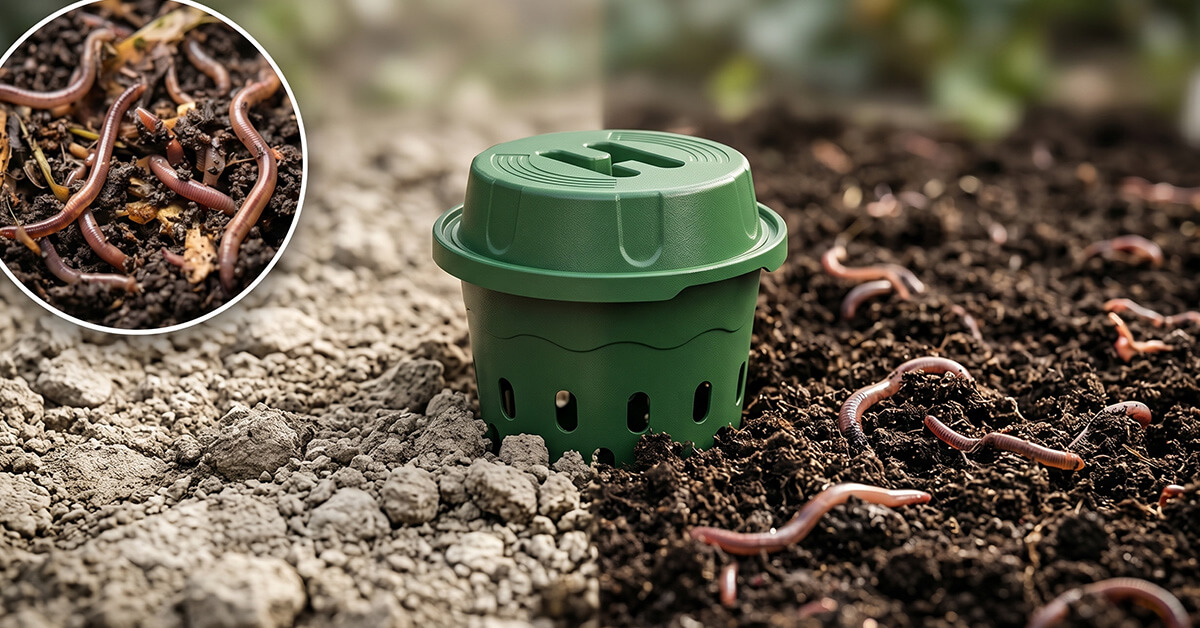
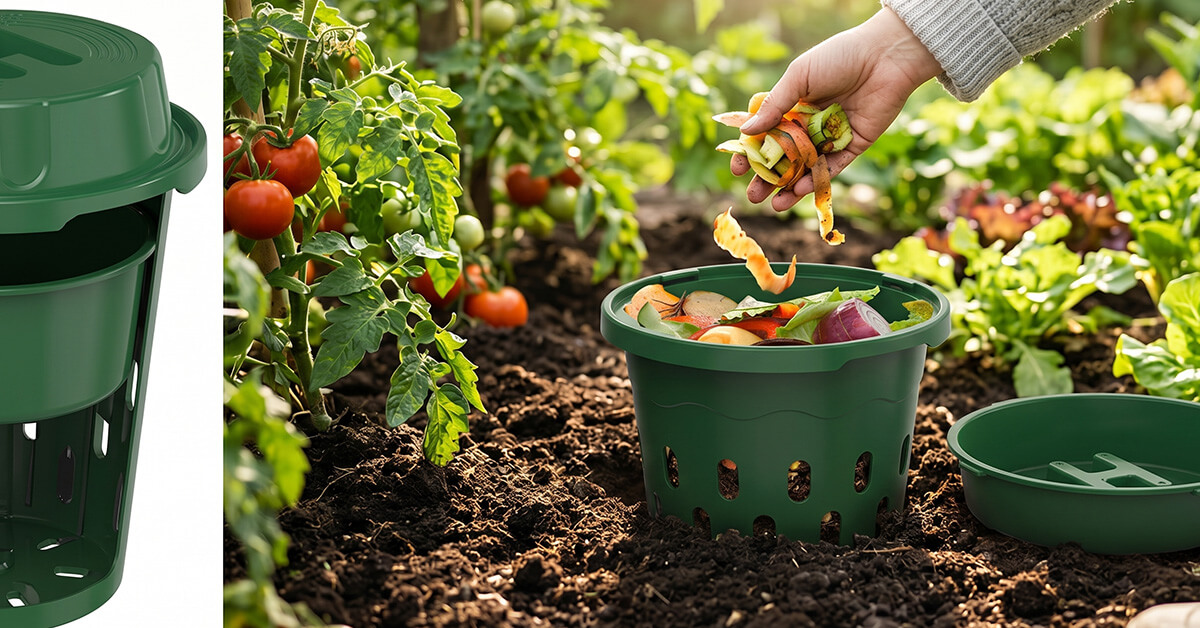
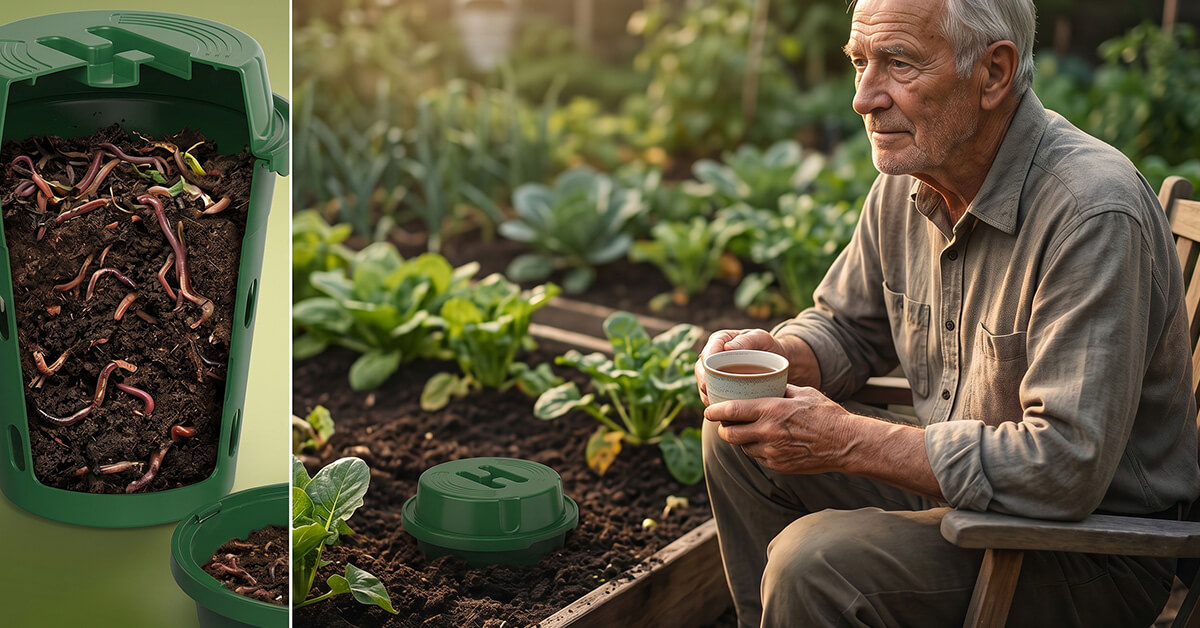
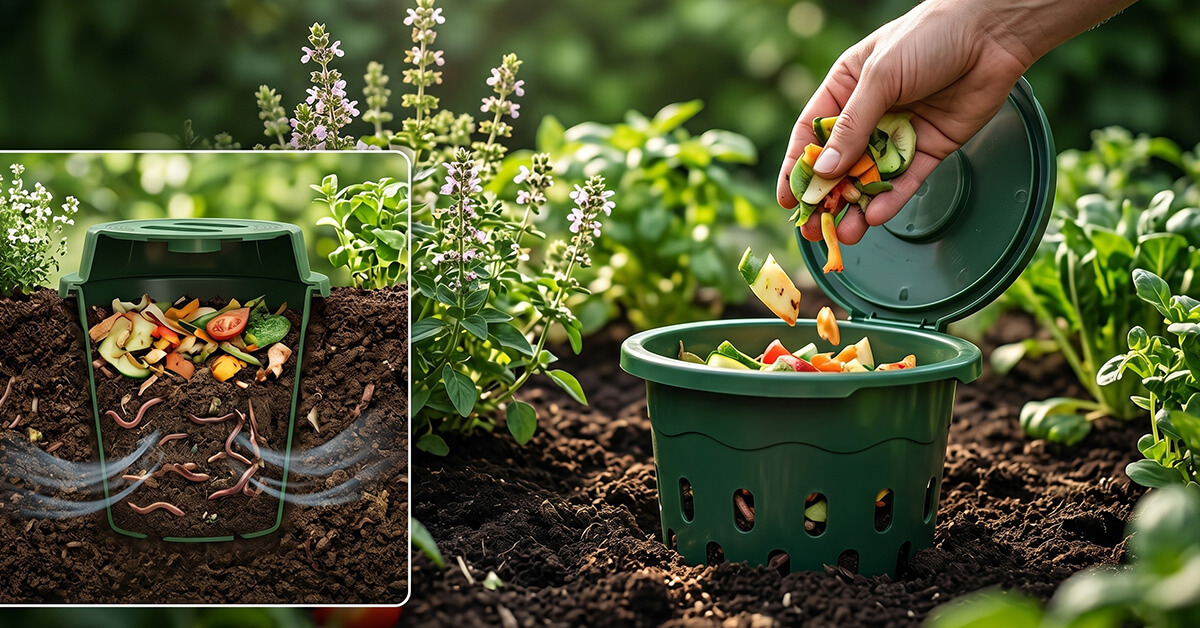
It's a compact PVC bin — about 8 litres, roughly the size of a large kitchen pot — that buries directly into a garden bed. The walls are perforated with 360-degree ventilation holes. There's a removable lid on top. That's it. That's the whole thing.
You dig a hole. You set it in. You start dropping in kitchen scraps — vegetable peelings, eggshells, coffee grounds, garden trimmings. You put the lid back on.
Then you walk away.
The worms come. They come up through the soil, in through the ventilation holes, and they get to work. In 2 to 3 months, the scraps inside have transformed into nitrogen-rich compost that feeds directly into the surrounding soil. No turning. No monitoring. No smell — the 360-degree airflow keeps everything balanced and aerobic, which is the technical way of saying it doesn't stink.
The dual-bin system means you can set up 2 GreenNests side by side. Fill one while the other finishes processing. When the first bin is ready, its compost has already spread into the roots around it. You empty it, start again, and the cycle never stops. Continuous composting, year-round, with roughly 3 minutes of effort per week.
The whole thing weighs 4.44 pounds. A grandchild could carry it.
"I Sat in My Garden Chair and Felt Like His Grandson Again"
Robert ordered a GreenNest in late April. He buried it at the end of his runner bean row, where the soil was most tired. He started with onion skins, carrot tops, and a handful of used tea bags.
"I put the lid on and thought, 'Well, this is either going to work or it's going to be another plastic thing I feel guilty about buying.'"
He checked it after 2 weeks. The scraps were already breaking down. He could see worm activity — not huge numbers yet, but they were there. Coming up through the base, in through the ventilation holes, doing exactly what worms have done for 500 million years.
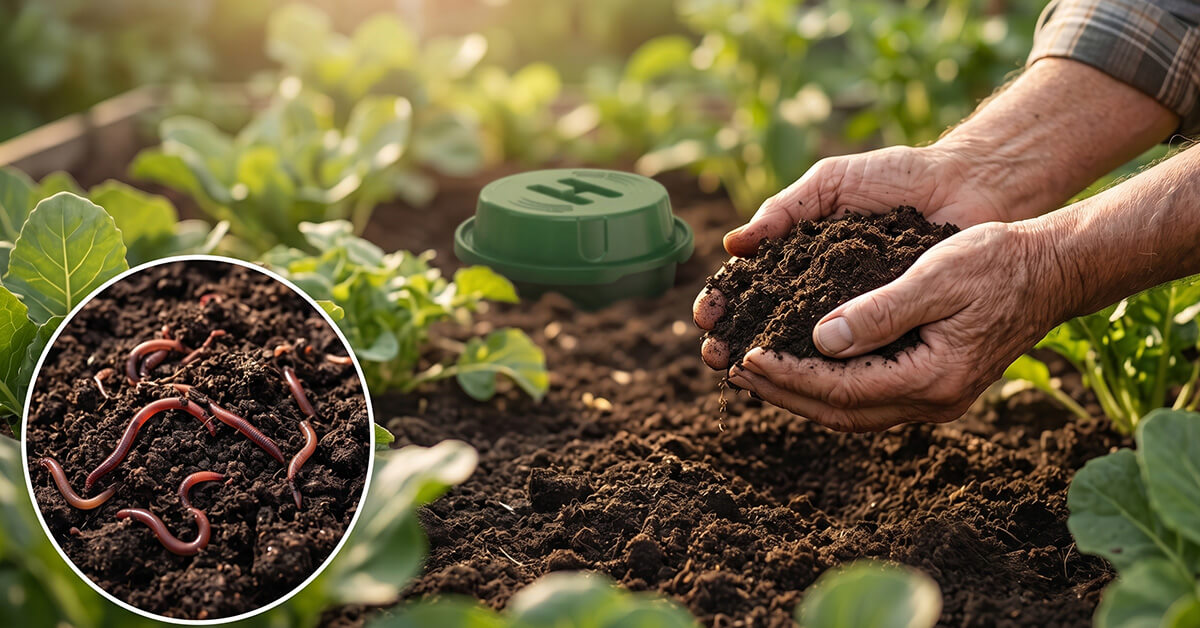
By mid-July, the soil around the GreenNest had changed colour. He could see it. Not just darker — alive. When he pushed his fingers into the earth near the bin, it crumbled the way good soil is supposed to crumble. The way he remembered his grandfather's soil crumbling when he was 8 years old, sitting on an upturned bucket in a vegetable patch in Worcestershire.
"My runner beans went absolutely mad," he said. "Best crop I've had in years. But that's not really the point, is it?"
He paused.
"I sat in my garden chair with a cup of tea, looking at that dark soil, and I felt — this is going to sound daft — I felt like his grandson again. Like I'd finally remembered the thing I'd been trying to remember for 30 years."
It doesn't sound daft at all.
Why It Works When Other Composters Didn't
The people who struggle with traditional composting aren't doing anything wrong. The systems are just asking too much.
A tumbler needs turning every few days. A heap needs the right balance of greens and browns, moisture monitoring, and enough volume to generate heat. An open pile invites every rat and fox in the postcode. Worm farms that sit above ground need temperature regulation, bedding management, and careful feeding schedules.
The GreenNest sidesteps all of that because it goes into the ground, where temperature stays more stable, moisture regulates itself, and the local worm population does the labour without being asked.
There's no turning. The 360-degree ventilation handles airflow passively — air circulates through the perforated walls, which prevents the anaerobic conditions that cause smell. The removable lid lifts off with one hand, so adding scraps takes less time than it takes to fill a kettle. And because it's buried, there's nothing to attract pests or offend neighbours.
It's durable PVC, built to stay in the ground through frost, rain, heat, and everything the British weather (or any weather) throws at it. It doesn't rot. It doesn't crack. It just sits there, quietly doing the thing that soil has always needed someone to help it do.
The compact 8-litre size means it fits in any garden bed — even a small raised bed on a patio. And at under 5 pounds, moving it to a new spot if you rearrange the garden is effortless.
Over 48,000 customers and 1,840 verified reviews say roughly the same thing: it just works.
This Isn't Really About Composting
Let's be honest about what this is actually about.
It's about a feeling. A feeling that something simple and true got lost along the way, buried under plastic bags of shop-bought compost and complicated instructions that made a natural process feel like a chemistry exam.
Your grandparents didn't have a "composting system." They had a habit. Scraps went in the ground. The ground gave back. The tomatoes tasted like tomatoes. The carrots were sweet. The soil smelled like soil — that deep, earthy, unmistakable smell that meant everything was working exactly as it should.
The GreenNest doesn't reinvent anything. It just makes it easy to go back. To take your kitchen scraps to the garden the way someone you loved once did. To watch the soil change under your hands. To grow something in dirt that you made rich, not a factory.
And maybe, on a quiet evening in the garden, to feel a connection you thought time had taken from you — and realise it was waiting there all along, just beneath the surface.
Try the GreenNest Today — With a Special Introductory Offer
Right now, first-time buyers can get the GreenNest Inground Worm Composter at half price — a limited introductory offer that could end at any time.
Every order ships within 24 hours and arrives at your door with no delays, no complications. Setup takes minutes. And if it doesn't feel right — if it doesn't bring that soil back to life the way it should — there's a 30-day money-back guarantee. Full refund. No questions asked. No forms. No hassle.
The soil is waiting. It's been waiting a long time.
Click the link above to see if GreenNest is still offering a 50% off discount.