There's a specific colour of light that lives somewhere deep in your memory — not the flat white glow of modern bulbs, not the bluish tint that makes everything look like a hospital corridor. It's the warm, honey-amber wash that used to spill from every porch, every back door, every streetlamp on the walk home.
If you're over 60, you don't need anyone to describe it. You've felt it on your skin. You've sat in it with people you loved. You've arrived home to it a thousand times and felt, without thinking about it, that everything was okay.
And then, somewhere in the last 20 years, it quietly disappeared.
The old incandescent bulbs were phased out. LEDs took over. Everything got brighter, more efficient, more modern — and somehow, less warm. The garden got lit. But it stopped feeling alive.
One woman in Bristol discovered, entirely by accident, that the feeling wasn't gone forever. It had just been waiting for the right light to bring it back.
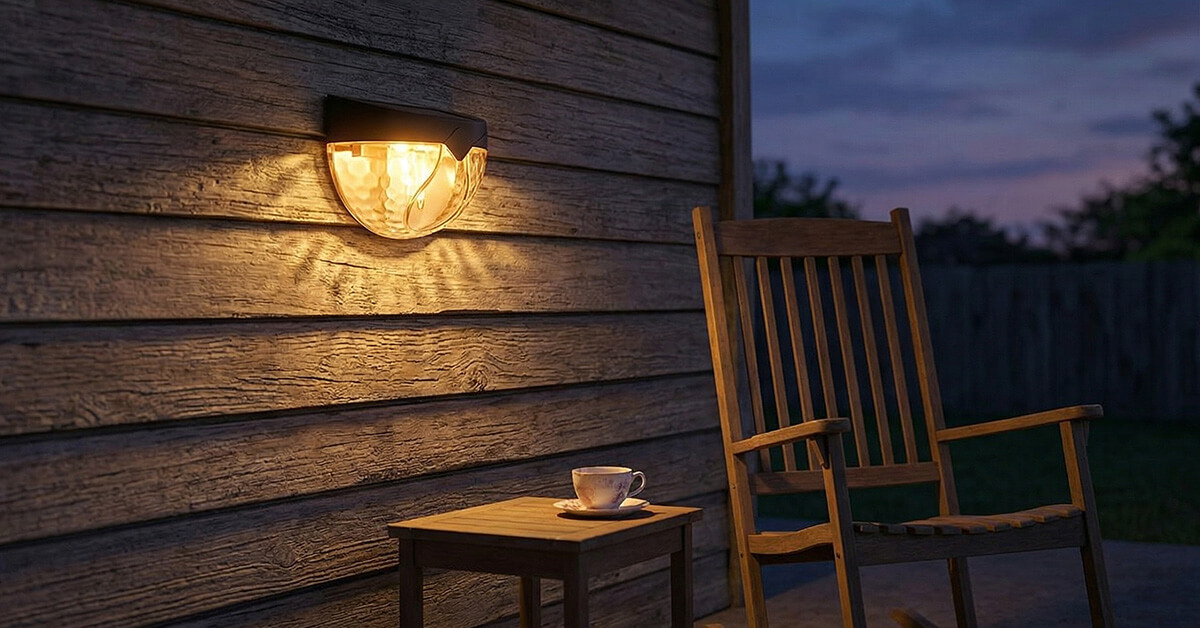
She'd Done Everything Right — So Why Did Her Garden Feel So Wrong?
Margaret had spent 3 years getting her back garden exactly how she wanted it. New paving stones. Raised flower beds. A little seating area where she and her husband, David, could sit out on warm evenings.
She'd even replaced every outdoor light with LEDs — the kind the hardware store said would last 50,000 hours. Energy efficient. Long-lasting. Sensible.
And they were all of those things.
But on the first genuinely warm evening of May, when she carried two glasses of wine outside and sat down to enjoy the garden she'd worked so hard on, something felt off.
The flowers looked washed out. The paving looked grey. The whole space had a faintly clinical quality, like sitting in a well-lit waiting room that happened to have roses.
"It looks like a car park," David said, not unkindly.
He was right. It was bright enough. But it wasn't beautiful. It wasn't the kind of light you wanted to linger in. It wasn't the kind of light that made you forget what time it was and stay out for one more conversation, one more story, one more glass of wine.
Margaret knew what was missing. She just didn't think it still existed.
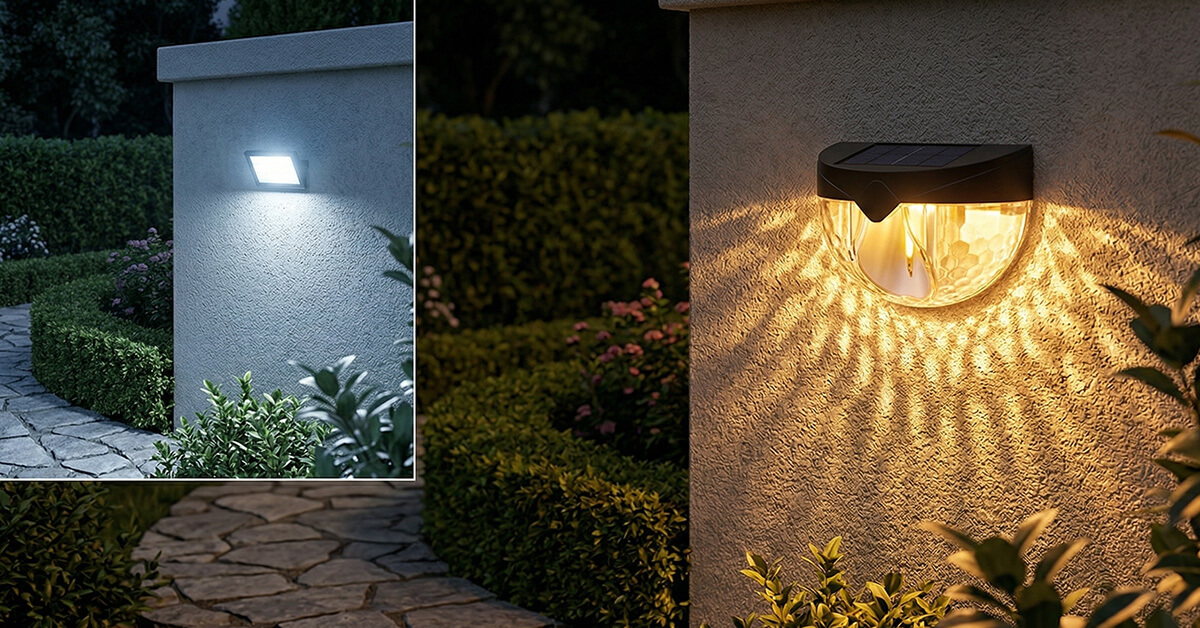
The Light That Doesn't Exist Anymore (Except It Does)
The warm glow of a tungsten filament isn't just a colour. It's a frequency. A specific wavelength that sits right around 2,700 Kelvin — the same colour temperature as the setting sun, as candlelight, as every bulb that lit every home in Britain and America from the 1880s until about 2010.
Scientists call it "warm white." But that phrase doesn't capture what it actually does to a space. Or to you.
Research in environmental psychology has shown that warm-spectrum lighting reduces cortisol levels, promotes relaxation, and creates a perception of safety and intimacy. It's why restaurants use candlelight. It's why hotel lobbies feel welcoming. And it's why your grandmother's kitchen — despite being a quarter the size of a modern one — always felt like the most comfortable room in any house you'd ever been in.
Cold white LEDs, by contrast, boost alertness. They're perfect for offices, operating theatres, and warehouse floors. They're efficient. They're practical.
They're also the reason your garden feels like somewhere to walk through quickly rather than somewhere to stay.
Margaret wasn't imagining the difference. The difference is physics.
What she didn't know was that a small company called TruTronica had figured out how to put that exact warm tungsten glow into a solar-powered wall lamp — no wiring, no electrician, no electricity bill. Just that specific amber warmth she'd been missing for 2 decades, powered by nothing but sunlight.
They called it the Crystal Dome.
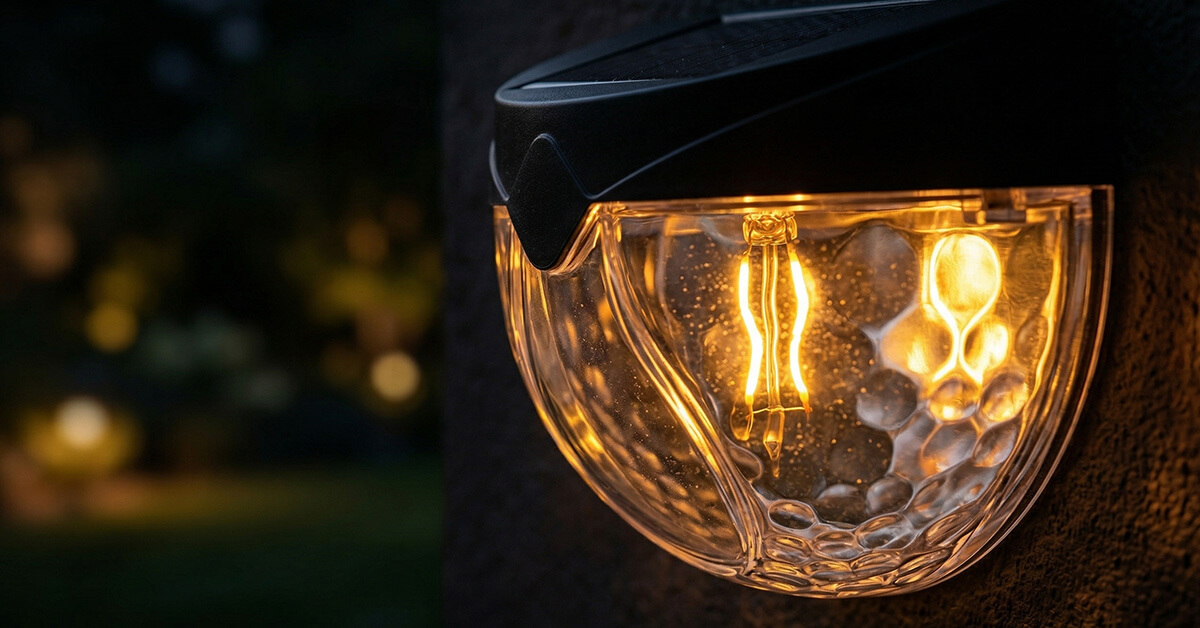
What Happened the First Evening She Turned It On
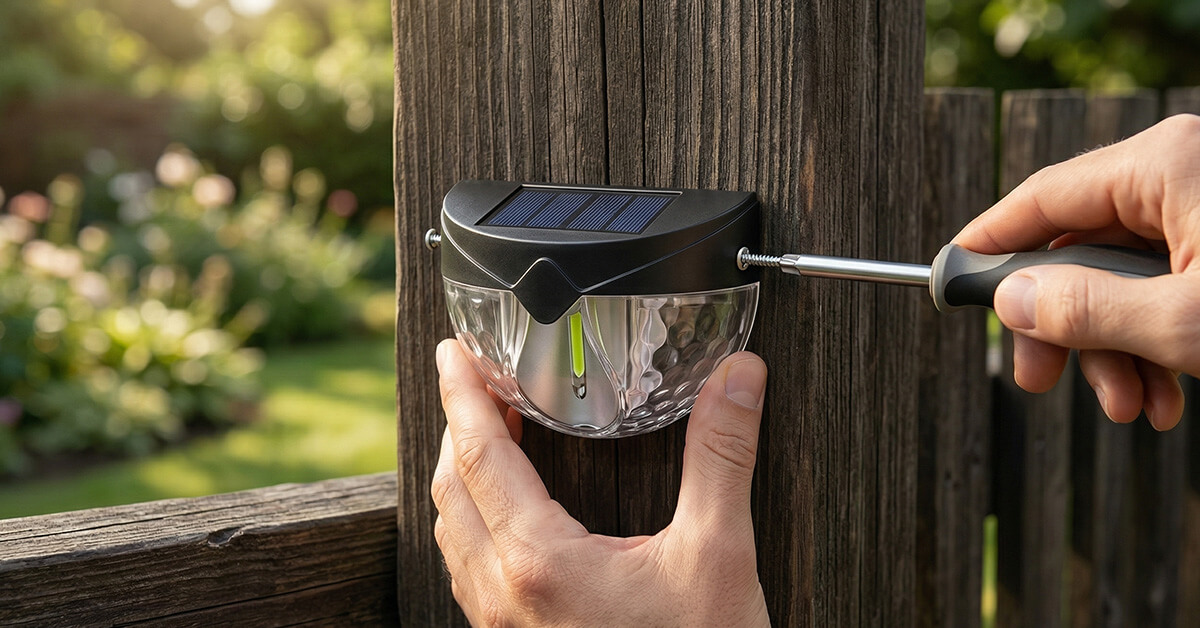
Margaret ordered 4 of them. David mounted them along the garden fence in about 20 minutes — just screws, no wires, no drilling into anything complicated. The built-in solar panels charged during the day.
That evening, she wasn't even thinking about the lights. She'd gone out to water the hanging baskets.
And then dusk came.
The Crystal Domes switched on by themselves — no timer, no switch, no app. Just a built-in sensor that detects when daylight fades and responds automatically.
Margaret stopped with the watering can mid-pour.
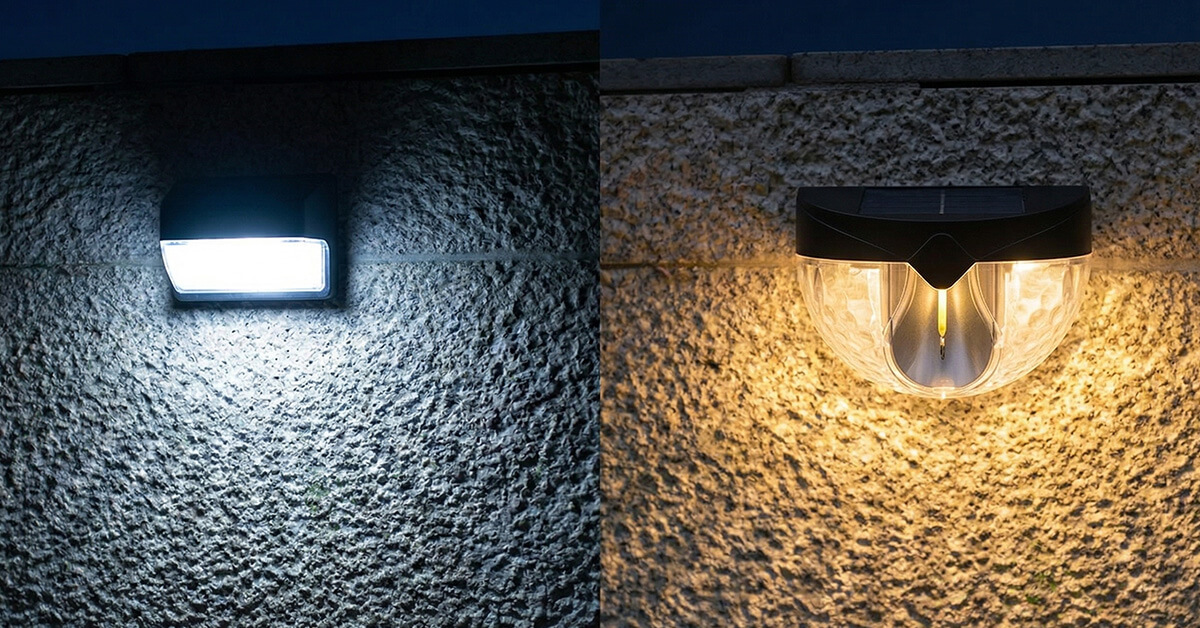
The garden had changed. Not dramatically, not theatrically. But the quality of the light — that particular honey-amber warmth spilling through the crystal-clear dome — transformed everything. The roses looked like roses again, not specimens under fluorescent strip lighting. The paving stones looked warm, like sun-baked terracotta. The seating area looked like somewhere you'd actually want to sit.
She stood there for a full minute before she understood what she was feeling.
It was 1987. It was every barbecue her parents had ever thrown. It was arriving home from a late shift and seeing the porch light on and knowing someone had left it on for her. It was sitting on the back step with her children when they were small, watching moths circle a bulb that gave off that exact colour of warmth.
She hadn't just installed a light. She'd recovered a feeling she didn't know she'd lost.
"David," she called inside. "Come and sit out. Bring the wine."
They stayed out until 11 o'clock.
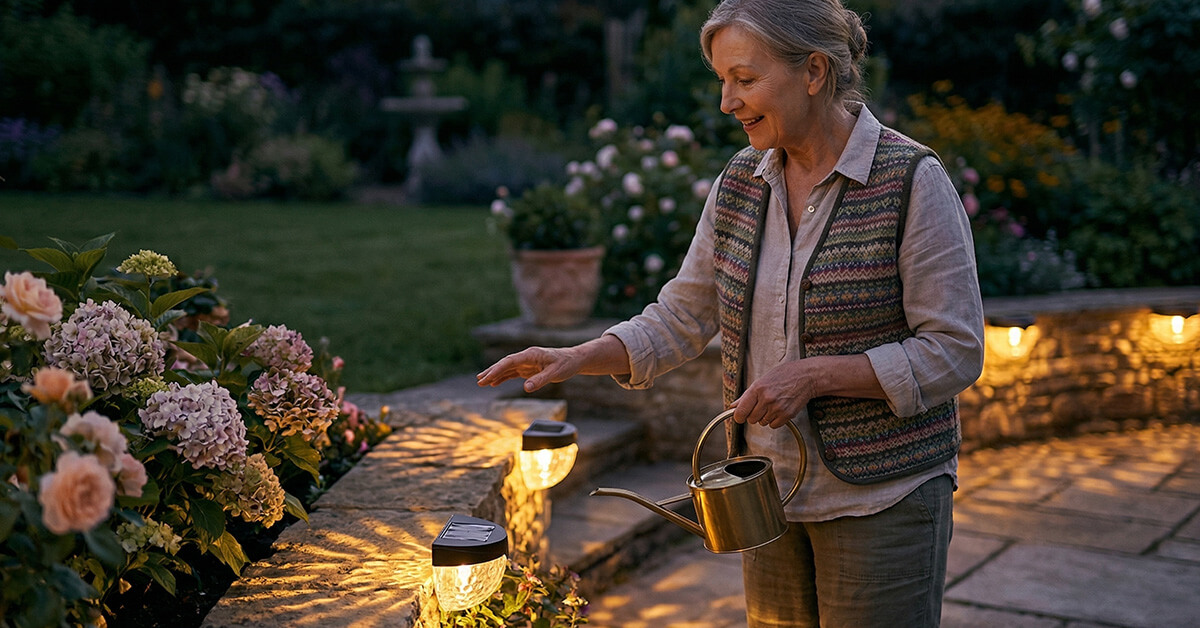
Why This Light Feels Different From Every Other Solar Lamp
Most solar garden lights use standard LEDs and nothing else. They produce light, technically. But the light they produce sits at 5,000 to 6,500 Kelvin — the same range as daylight or a fluorescent tube. Functional, yes. Atmospheric, no.
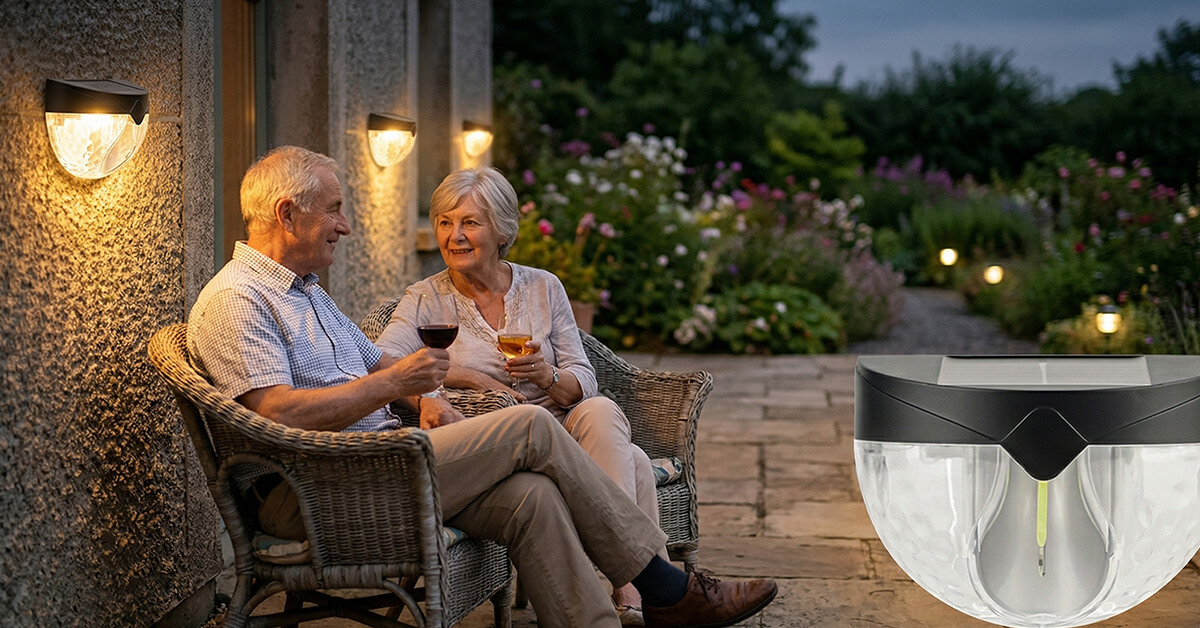
The Crystal Dome does something different. Inside its classic transparent dome sits an upgraded tungsten filament bulb, paired with additional LED lights. The tungsten filament provides the warm amber base — that 2,700K glow that triggers comfort and nostalgia in the brain — while the LEDs add brightness and efficiency.
It's a combination that shouldn't work as well as it does. Tungsten filaments belong to the past. Solar technology belongs to the future. But together, they create something that neither can achieve alone: a bright, warm, genuinely beautiful light that runs on sunlight and costs nothing to operate.
The effect isn't subtle. People who've tried every solar light on the market — the £5 stick-in-the-ground types, the motion-sensor floodlights, the fairy lights that stop working after the first frost — all say the same thing.
This one actually looks like real light.
Because it is real light. The same kind of light that illuminated every meaningful evening of your life before someone decided efficiency mattered more than beauty.
Built for People Who've Been Burned by "Solar Lights" Before
If you've bought solar garden lights before, you probably have a box of dead ones in the garage right now.
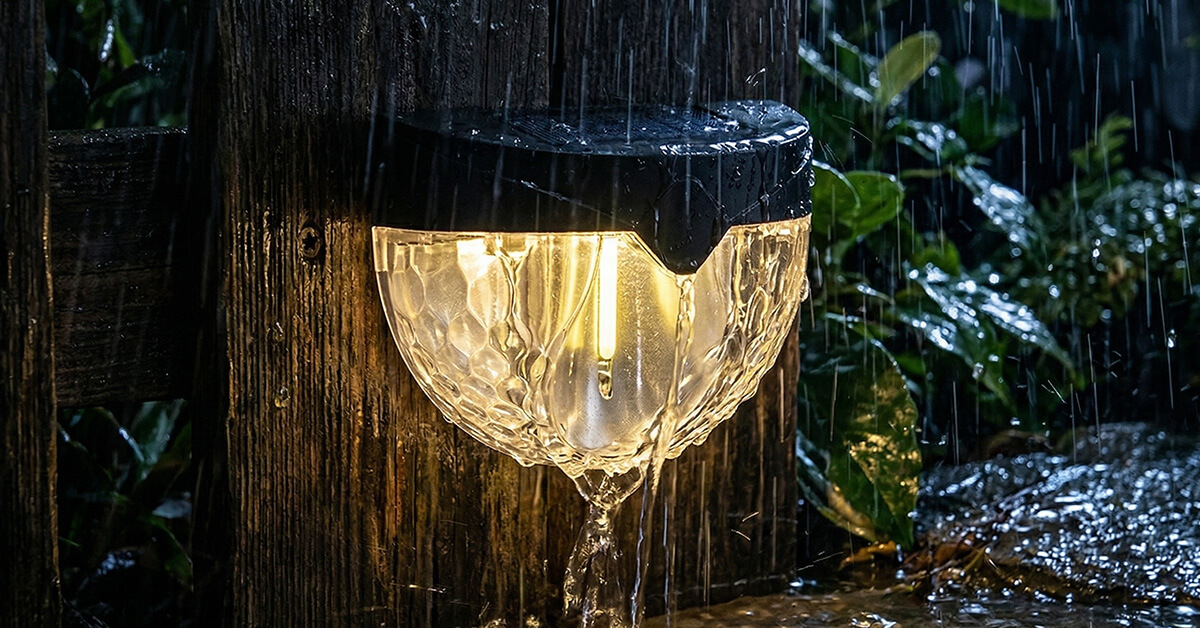
The cheap ones last a season. Maybe 2 if you're lucky. The first heavy rain gets inside. The batteries corrode. The plastic yellows and cracks. By the second winter, they're landfill.
The Crystal Dome was designed with that exact frustration in mind.
The housing is constructed from ABS and PC — the same durable materials used in automotive components and safety helmets. Not the thin, brittle polycarbonate that cracks in a frost.
It carries an IP65 waterproof rating. That's not splash-resistant. That's "direct water jets from any angle" resistant. Rain, sleet, snow, hail, that sideways November rain that gets into everything — none of it gets into this lamp. The battery and filament bulb are fully sealed.
The solar panel is angled to maximise energy absorption even in the lower sun positions common in autumn and early spring — the exact seasons when you most need outdoor lighting and when cheaper solar lights tend to give up entirely.
A full charge takes 5 to 6 hours of sunlight. It then provides 6 to 8 hours of continuous warm light, dusk to dawn, automatically. Every single night.
And if the battery eventually needs replacing after a year or 2? The open-bottom design lets you swap it in seconds — 1 AAA rechargeable Ni-MH battery, no tools, no disassembly. Same for the bulb.
This isn't a gadget. It's an outdoor fixture that's meant to stay up for years.
No Wiring. No Switches. No Thinking About It at All.
One of the quiet pleasures of getting older is the desire for things that simply work without demanding attention.
The Crystal Dome asks for nothing. Mount it. Flip the switch under the solar panel to ON. Walk away.
From that moment forward, it manages itself. The optimised solar panel charges the battery during daylight hours. The built-in light sensor detects when dusk arrives and switches the lamp on. When dawn comes, it switches off. Every day. Every night. Without fail.
No timer to programme. No remote to lose. No app to download and then forget the password for.
It just works. The way a porch light used to work when someone inside the house simply left it on for you.
Mounting is equally straightforward. 2 screws. A flat surface — fence post, wall, pillar, stair riser, garden gate. 15 minutes at most, even if you're not handy. No wiring means no electrician, no cable runs, no circuit breakers, no ongoing electricity cost.
The money it doesn't cost to run is almost beside the point. The real value is the absence of hassle. It's one less thing to manage, adjust, maintain, or worry about. In a world that seems determined to make everything more complicated, the Crystal Dome is refreshingly, almost stubbornly, simple.
What 4,800 People Noticed That First Evening
The reviews — 1,840 verified and counting — tell the same story over and over, in different words.
"I didn't expect to feel emotional about a garden light."
"My wife asked me what was different about the garden. It was the light. Just the light."
"Reminds me of my parents' back porch. I can't explain it better than that."
"I've bought solar lights every summer for 10 years. These are the first ones that actually look like proper lights."
"Bought 2, then ordered 4 more the same week."
What nobody expected was the emotional response. People ordered a solar lamp. What arrived was a feeling — the specific, irreplaceable warmth of tungsten light that an entire generation grew up inside and has been quietly grieving without realising it.
That's not marketing language. That's what 4,800 customers actually experienced.
The Crystal Dome doesn't just illuminate a garden. It returns something to it. Something that modern lighting took away so gradually that most people didn't notice until they saw the alternative.
The Spaces It Was Made For
Stairs — the ones that become invisible and dangerous after dark. The Crystal Dome turns them into a safely lit, attractive feature instead of an accident waiting to happen.
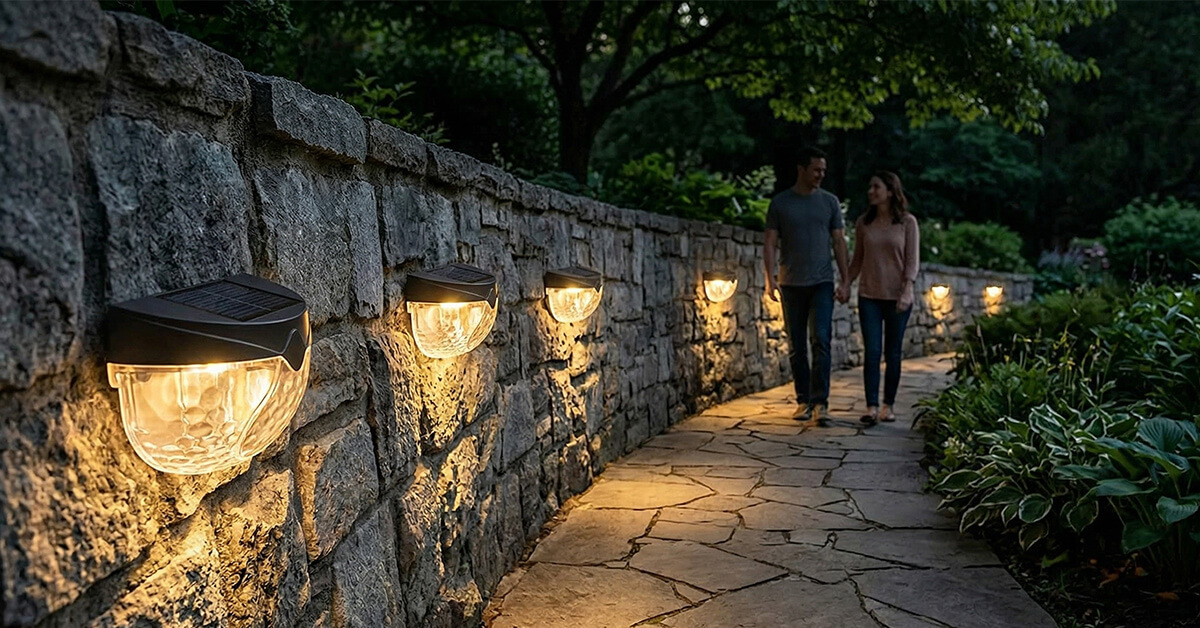
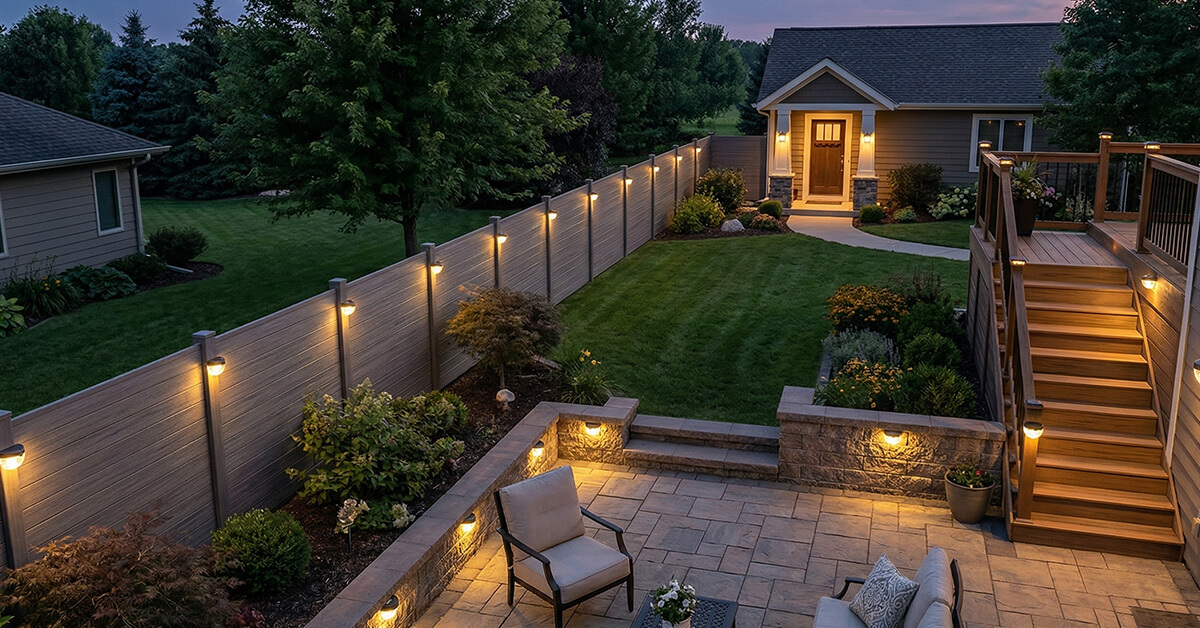
Fence lines — the boundary of your garden becomes a warm perimeter of light, defining the space beautifully rather than letting it disappear into blackness at 7 PM.
Patios and decking — where you sit on warm evenings. Where the grandchildren play. Where you have that glass of wine and don't want to feel like you're dining under an interrogation lamp.
Porches and front doors — so you can find your keys, see who's visiting, and arrive home to a house that looks welcoming rather than dark and closed.
Pathways and driveways — so every step between the car and the front door is visible, safe, and dignified.
Garden walls — because a beautiful garden doesn't stop being beautiful at sunset. It just needs the right kind of light to show it.
Each Crystal Dome covers its area independently. No wiring between units. Add as many as you need, wherever you need them, at any time. Start with 2 and add more next month. The design is consistent and classic enough that they always look intentional, never cluttered.
What Margaret Told Her Sister
"It sounds ridiculous, but these lights made the garden feel like home. Not like a showroom. Not like a hardware project. Like home. Like it used to feel when we were kids and Mum and Dad had the back door open and that warm light was just... there. I didn't know I missed it until I saw it again."
Her sister ordered 6 the next day.
David, for his part, appreciated the engineering: the sealed IP65 housing, the optimised solar angle, the tool-free battery replacement. He's the sort of man who reads specifications.
But even he admitted, standing in the garden at 10 PM on a Tuesday in June with a glass of red wine and the Crystal Domes glowing along the fence, that it wasn't the specifications that made him stay outside.
It was the feeling.
The same feeling that has always lived inside that particular shade of warm light. The shade that makes food look better, faces look kinder, gardens look deeper, and evenings feel like they could last forever.
The shade that the Crystal Dome — somehow, improbably, powered by nothing but the sun — brings back.
First-Time Buyer Offer: Half Price, No Risk, No Rush
For a limited time, the Crystal Dome Solar LED Wall Lamp is available to first-time buyers at 50% off the regular price.
Every order ships within 24 hours, arrives quickly, and is protected by a 30-day money-back guarantee. If the Crystal Dome doesn't transform your outdoor space — if it doesn't make you stop in your tracks on that first evening the way Margaret did — send it back for a full refund. No forms. No questions. No hassle.
But if it does what 4,800 people say it will — if it brings back that warm, amber feeling you forgot you were missing — you'll wonder why you waited so long.
Some things shouldn't stay in the past. This light is one of them.
→ Claim your 50% introductory discount today before this limited-time offer ends.
Click the link above to see if Crystal Dome is still offering a 50% off discount.