There's a memory that sticks with you — the kind that comes back on a warm afternoon when you're standing in your garden, swatting at flies, wondering when something so simple became so complicated.
For Margaret Ellison, 74, of Lancaster County, it hit her last July. She was sitting on her back porch, iced tea in hand, watching a cloud of flies turn her beautiful hydrangeas into a no-go zone. On the railing sat three different bottles of spray — one that smelled like a hospital, one that warned against breathing it in, and one that flat-out didn't work.
"I remember thinking, my grandmother would have laughed at all this," Margaret says. "She kept a cleaner yard than anyone I ever knew, and she never once reached for a can of poison."
That thought sent Margaret down a path. And what she found at the end of it wasn't some high-tech gadget or a $200 pest control service. It was something her grandmother would have recognized in a heartbeat.

Her Grandmother Never Sprayed a Thing — And the Flies Stayed Away All Summer
If you grew up on a farm — or spent summers visiting one — you probably remember a few things about how the older generation handled pests. There were no warning labels. No safety goggles. No phone calls to an exterminator.
What there was: common sense.
Margaret's grandmother hung simple traps around the property. Bags and jars with natural bait inside, placed strategically in the sun, well away from the house. The flies came to the traps instead of the porch. The yard stayed pleasant. The garden stayed peaceful.
"It wasn't science," Margaret recalls. "It was just knowing how things worked. You put something that attracted flies where you wanted the flies to go — far away from where you were sitting. That was it."
The problem is, somewhere along the way, that kind of practical thinking got buried under aisles of chemical sprays, electric zappers, citronella everything, and products that promise the world but leave you with sticky hands and a yard that still buzzes.
The old way didn't disappear because it stopped working. It disappeared because nobody was selling it anymore.
Until now.
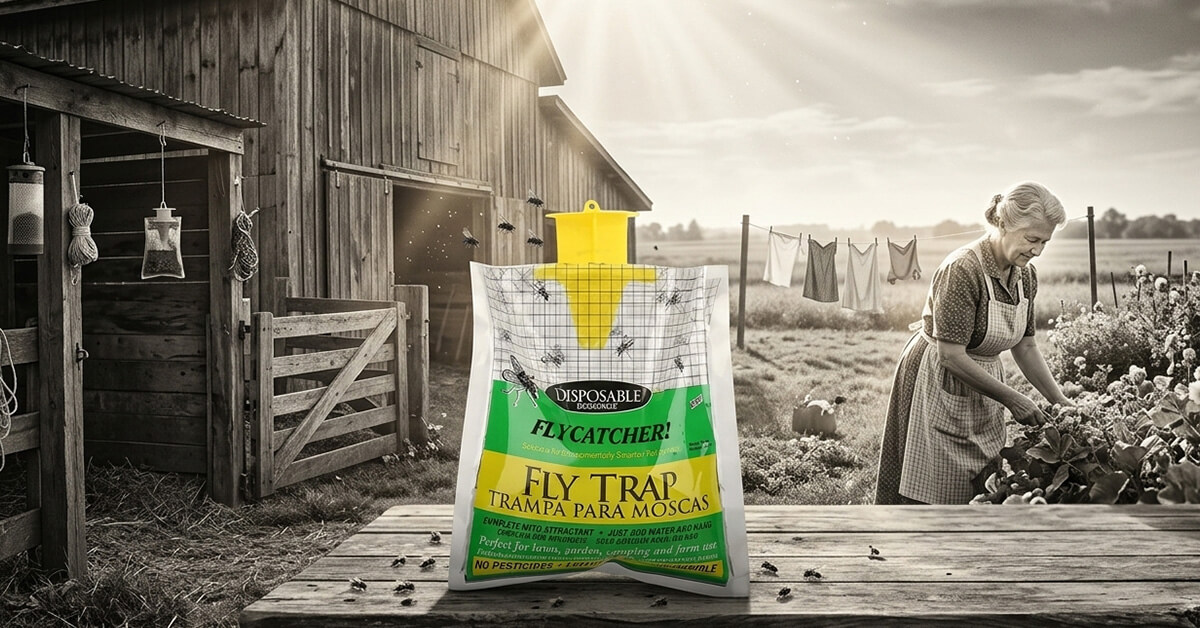
A Bag, Some Water, and the Same Principle Your Grandparents Swore By
The product is called CatchNTrap, and the first thing most people notice about it is how remarkably simple it is.
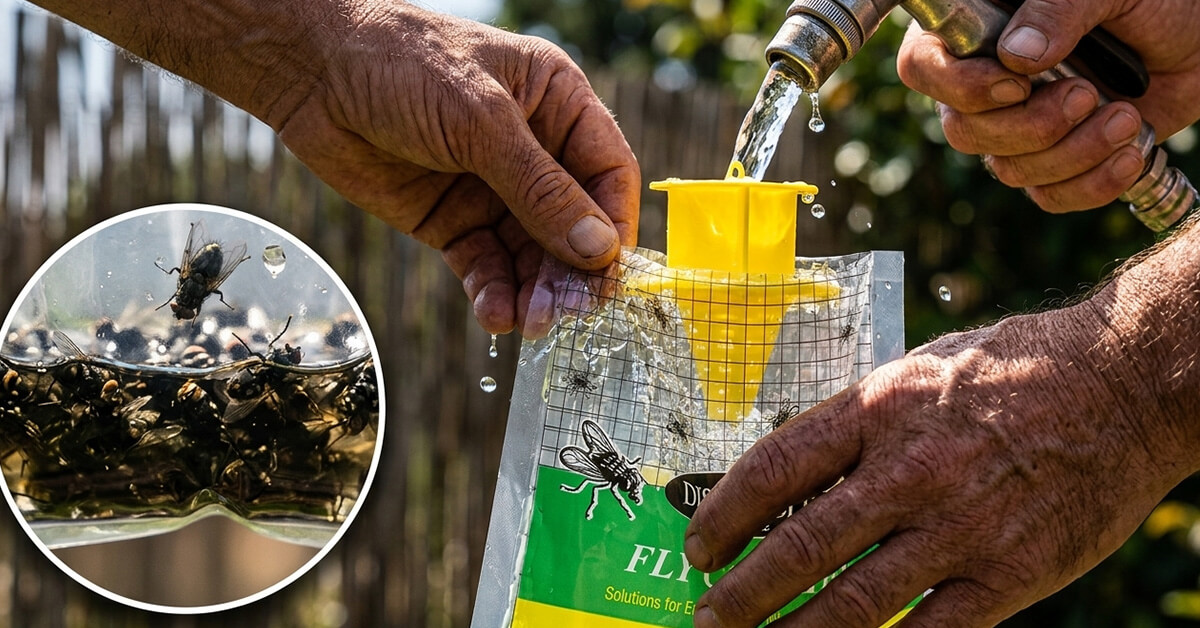
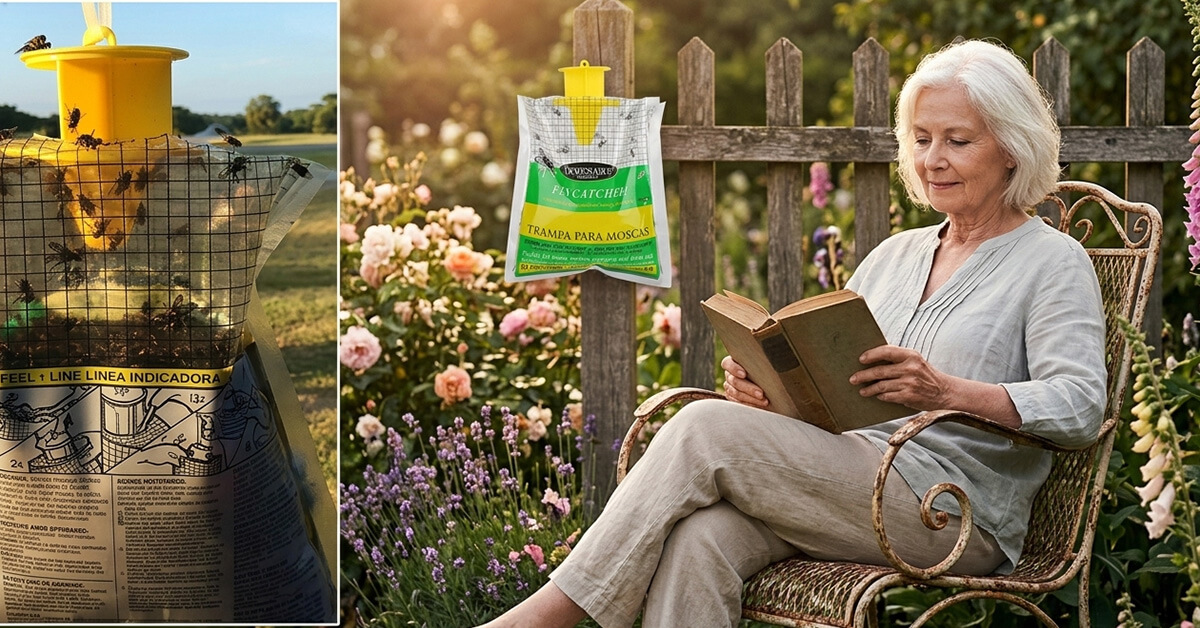
It's a bag. You add water. You hang it up outside. That's the whole process.
Inside the bag is a natural attractant — no chemicals, no pesticides, no toxins of any kind. When water hits it, it dissolves and releases a scent that flies find irresistible. They enter through the top and they don't come back out.
One bag catches up to 20,000 flies.
Read that number again: 20,000.
There's no battery. No plug. No app to download. No instruction manual thicker than a dinner menu. You don't need your grandson to come over and set it up. You open the bag, pour in water, hang it from a branch or a fence post or a nail on the shed, and walk away.
"When I first read about it, I thought — this is exactly what Grandma used to do," Margaret says. "Just smarter packaging."
She's not wrong. The CatchNTrap is built on the same principle that farmers and gardeners have relied on for generations. Attract the flies to a spot far from where you live and let nature do the rest. The only difference is that someone finally put it in a convenient, disposable bag that you never have to open, clean, or touch once it's done its job.
When it's full, you throw the whole thing away. No mess. No gagging over a jar of dead flies. No rinsing anything out in the sink.
Why the Chemical Aisle Should Make You Nervous — And This Doesn't
Here's something worth thinking about.
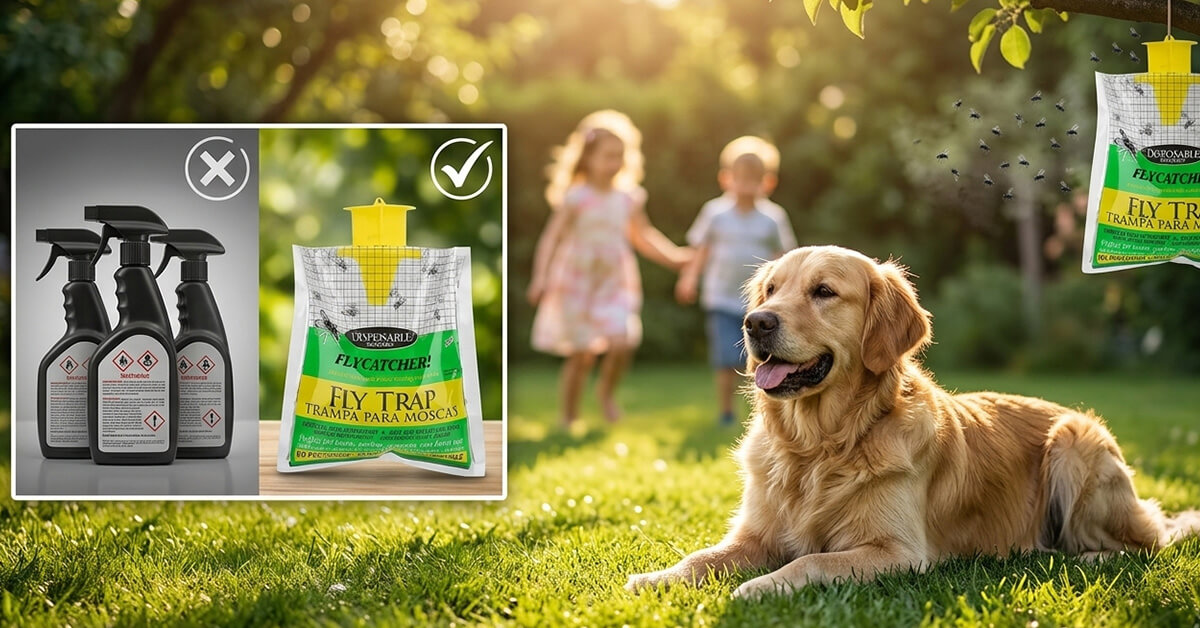
Most fly sprays on the market carry warnings. Small print you need reading glasses to see. Cautions about ventilation, skin contact, ingestion, harm to aquatic life, danger to bees. Some of them tell you not to use them near food preparation areas — which is a bit ironic when you're trying to protect your outdoor dining table.
For anyone with grandchildren running through the garden, a dog who eats everything off the ground, or a cat who likes to roll in the grass, those chemical warnings aren't just fine print. They're a genuine concern.
CatchNTrap uses 100% natural active ingredients. Zero pesticides. Zero harmful chemicals. Nothing that requires gloves, masks, or a second thought about whether it's safe to hang near the stable where your horse feeds or the garden where your tomatoes grow.
Over 48,000 customers have made the switch, backed up by more than 1,840 verified reviews. These aren't early adopters chasing the latest trend. They're people who got tired of sprays that didn't work and solutions that created more problems than they solved.
People like Jim Carver, 68, who keeps 3 horses on his property outside of Austin: "I've tried every fly product they sell at the feed store. Most of them I wouldn't use around the horses, and the ones I would use didn't do a damn thing. I hung 2 CatchNTrap bags near the stable and the difference was obvious within a day. My wife says the backyard is ours again."
The 20-Foot Rule: Placement That Actually Makes Sense
One of the smartest things about CatchNTrap is the guidance that comes with it — guidance that mirrors exactly what old-timers have always known about managing flies.
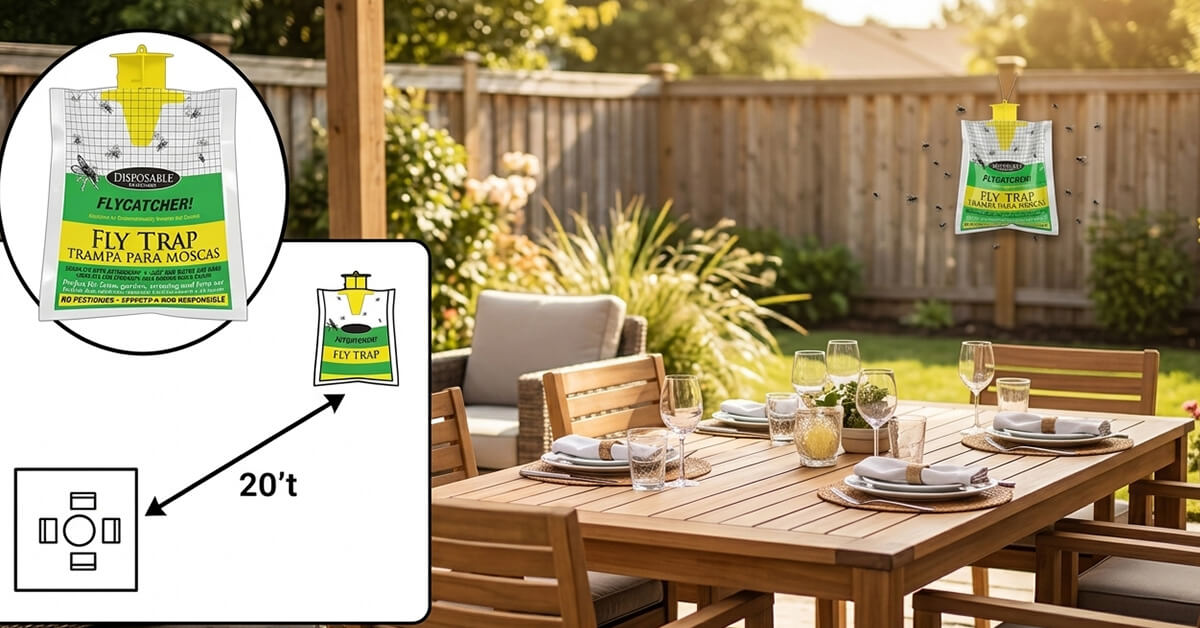
You hang it at least 20 feet from your living area. Not next to your porch. Not beside the barbecue. Out there — where the flies already are. Near the compost heap. By the fence line. Close to the barn or the garden shed.
The idea isn't to kill flies where you're standing. It's to pull them away from where you're standing. To give them somewhere else to go — somewhere they want to be even more than your potato salad.
It works best in natural light because that's when flies are most active. A sunny spot with good airflow is ideal. Hang it from the cord that's already attached, and within about 2 hours, the trap is actively drawing flies in.
No repositioning. No fiddling. No checking on it every 30 minutes. Just hang it and forget about it until it's full — then toss it and replace it if you need to.
This is pest control the way it should be: thoughtful placement, natural ingredients, and results you can actually see.
"It's Not New — It Just Works. The Way the Old Things Always Did."
That line came from Margaret, during a phone call she didn't expect to last 45 minutes. She'd called to reorder. She stayed on the line because she wanted to talk about her grandmother's garden.
"People my age, we remember when you didn't need a degree in chemistry to take care of your own yard," she said. "You just needed to pay attention. Know what works. Trust the simple things."
CatchNTrap isn't revolutionary. It doesn't claim to be. It's a well-made bag with a proven natural attractant that catches an extraordinary number of flies without a single toxic ingredient. It's the kind of product that makes you wonder why it took so long for someone to package it properly.
It works for gardeners. It works for horse owners. It works for anyone who wants to sit outside on a summer evening without waving their hands in front of their face every 4 seconds.
And it works without asking you to compromise on safety, simplicity, or your own good judgment.
The kind of solution your grandmother would approve of — just in a bag you can order from your living room.
Right Now, First-Time Buyers Get Half Off — But It Won't Last
For a limited time, CatchNTrap is offering a special introductory discount of 50% off for anyone trying it for the first time. No code needed. No hoops to jump through. Just place your order and the discount applies automatically.
Every order ships within 24 hours and is backed by a full 30-day money-back guarantee. If it doesn't work exactly the way you hoped, send it back for a complete refund. No questions, no forms, no hassle.
Stock is limited, and at half price, these tend to move fast — especially heading into the warmer months when fly problems go from annoying to unbearable almost overnight.
If you've been looking for fly control that actually makes sense — something safe, something simple, something that just works — this is the moment to try CatchNTrap for yourself.
Your grandmother would tell you the same thing.
Click the link above to see if CatchNTrap is still offering a 50% off discount.