It was a Tuesday morning, and Margaret Holloway was doing what she always does when the boiler man comes — putting the kettle on and staying out of the way.
The annual service. Same engineer as last year. Same routine. He'd check the boiler, sign the certificate, and be gone before elevenses. Margaret had lived in her 3-bedroom semi in Dorset for 41 years. She knew every creak in the floorboards, every draught under the doors. If something were wrong, she'd know.
At least, that's what she believed.
The engineer finished up, packed his tools, and was halfway to the front door when he stopped. He turned around and asked a question so casually it almost didn't register.
"You have got a carbon monoxide alarm somewhere, haven't you?"
Margaret paused. She looked at the smoke alarm in the hallway — the one her son fitted years ago. But a carbon monoxide alarm? No. She'd never had one. Not in 41 years.
The engineer didn't lecture her. He just said, quietly: "You really should. CO has no smell. No colour. You wouldn't know it was there until it was too late."
Then he left.
And Margaret couldn't stop thinking about it.
The Danger That 41 Years Of Careful Living Couldn't Detect
Here's the part that unsettled Margaret most — she wasn't careless. She had the boiler serviced every year. She kept the kitchen ventilated when she cooked. She'd replaced the old gas fire in the living room a decade ago. She did everything a sensible person does.
But carbon monoxide doesn't care about any of that.
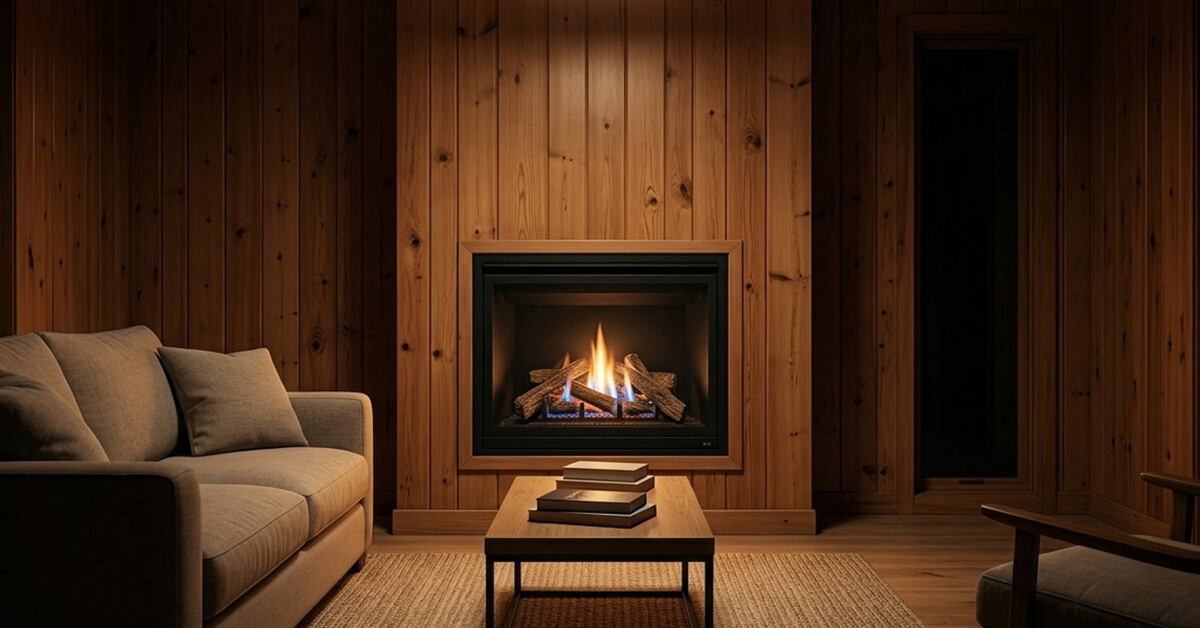
It's produced when gas, oil, coal, or wood doesn't burn completely. A slightly faulty boiler. A blocked flue. A pilot light that isn't burning quite right. Any of these can release CO into a room slowly and silently, building up over hours or days.
The symptoms? Headaches. Dizziness. Nausea. Confusion. The kind of things most people over 65 would put down to a bad night's sleep, a cold coming on, or simply getting older.
And that's exactly why it's so dangerous. Not because it strikes suddenly — but because it creeps in while you're blaming something else entirely.
The Health and Safety Executive reports that carbon monoxide poisoning accounts for around 60 deaths per year in the UK, with hundreds more hospitalised. Many of them in their own homes. Many of them people who considered themselves perfectly safe.
Margaret wasn't being dramatic. She was being honest with herself for the first time: she had no way of knowing whether the air in her own home was safe.
Why A Smoke Alarm Isn't Enough — And Why So Many People Don't Realise It
Margaret rang her son that evening. He was reassuring, the way sons are. "Mum, you've got a smoke alarm. You're fine."
But she wasn't fine. Because she'd looked it up. And what she found surprised her.
A smoke alarm detects smoke particles. That's it. Carbon monoxide is a gas — completely different. It doesn't trigger a smoke alarm. It doesn't set off any alarm at all unless there's a device specifically designed to detect it.
She also learned that CO detectors aren't all the same. Many of the cheap ones you find in bargain shops are basic units — they'll beep if levels get dangerously high, but they won't tell you anything before that point. They stay silent until there's a crisis.
Margaret didn't want to wait for a crisis. She wanted to know what was happening in her home right now. Not when it was already an emergency.
That's when her daughter-in-law sent her a link to something called the AirWatch.
She Could See The Numbers On The Screen — And That Changed Everything
The first thing Margaret noticed about the AirWatch was the screen.
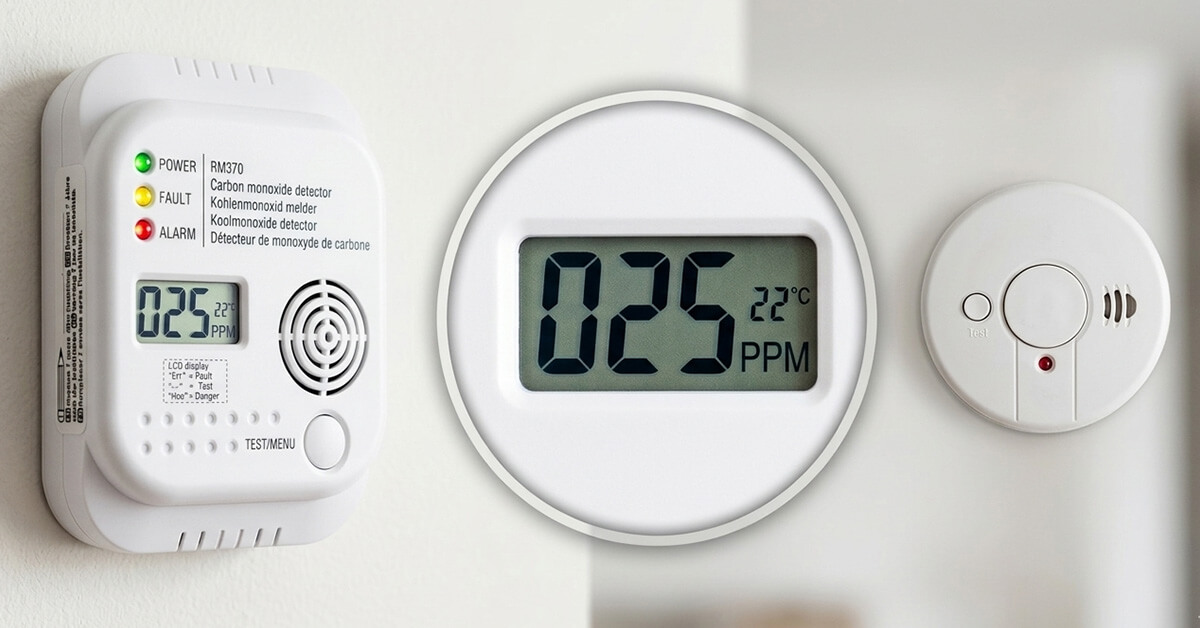
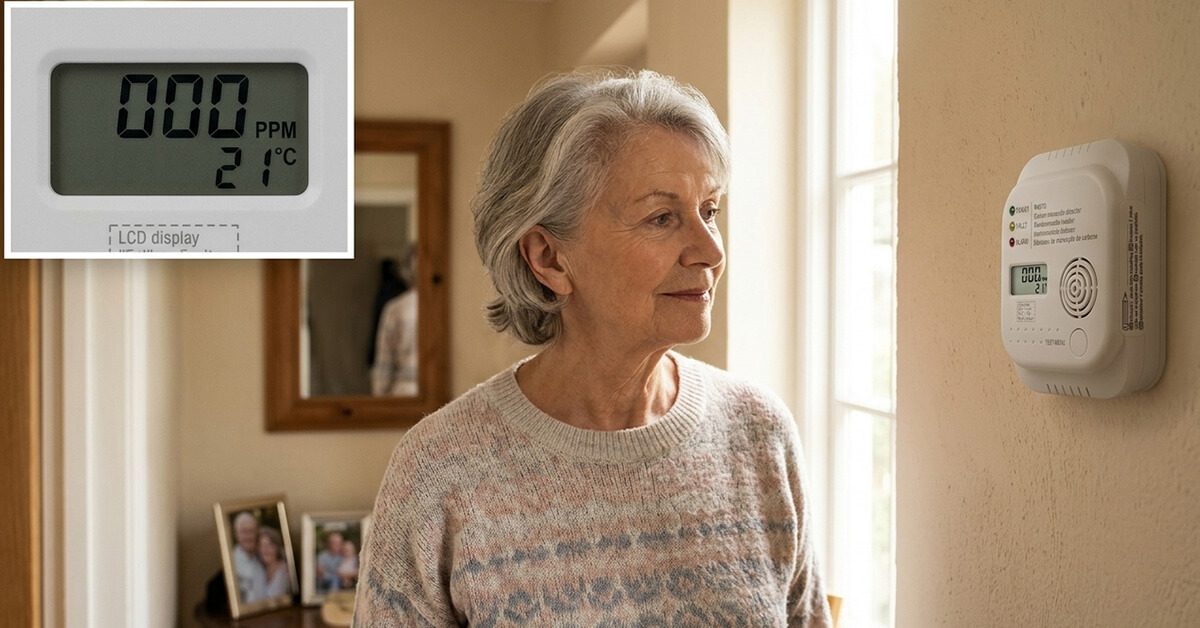
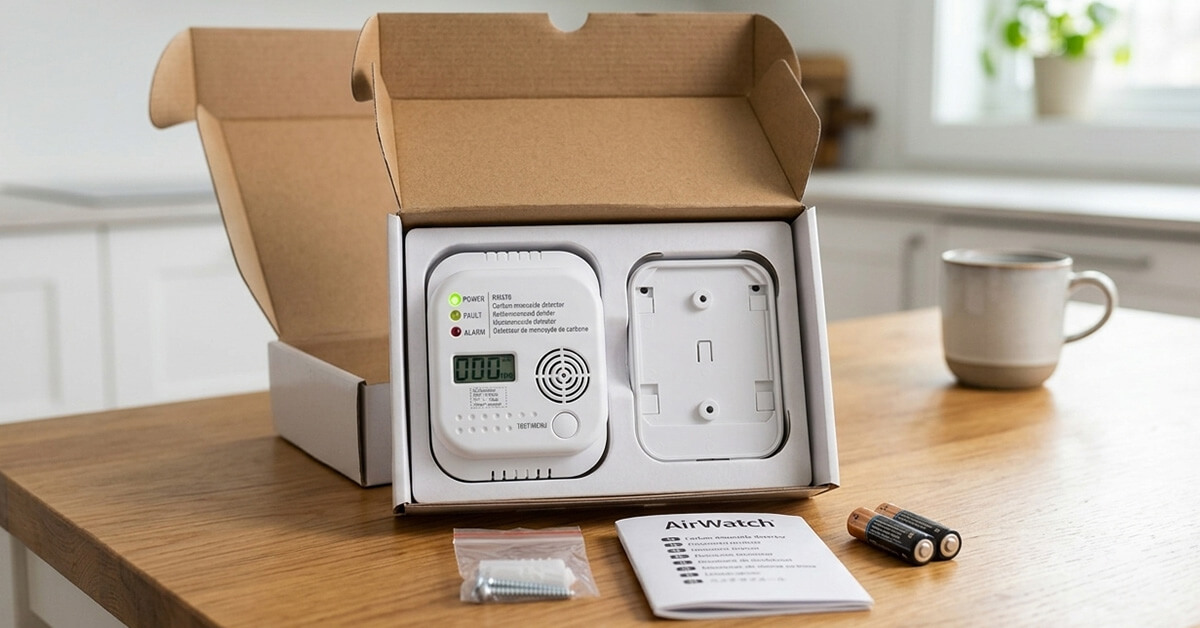
It wasn't just an alarm that sat on the wall waiting for disaster. It had a clear digital display that showed 2 things at all times: the current carbon monoxide concentration in the room and the temperature.
That meant she didn't have to wonder. She didn't have to trust silence. She could glance at the screen any time she walked past and see, in actual numbers, that the air was safe.
"It's like having a thermometer for danger," she told her neighbour. "Except instead of telling you it's cold, it tells you whether you can breathe safely."
The AirWatch uses a sensor with a 7-year lifespan — not a disposable unit that needs replacing every season. It continuously monitors the air, and the moment CO levels begin to rise, the reading changes on the display before the alarm even needs to sound.
For Margaret, that was the real difference. She wasn't just being protected. She was being informed. And for someone who'd spent 41 years trusting her instincts about her own home, being able to see the evidence with her own eyes mattered more than any beeping sound ever could.
When It Does Go Off, There's No Mistaking It
Of course, the display is only half the picture.
If CO levels do reach a dangerous point, the AirWatch doesn't send a polite notification. It triggers an 85-decibel siren — roughly the volume of a food blender running at full speed, or a lorry passing 15 metres from your window.
That's loud enough to wake someone from a deep sleep. Loud enough to be heard from another room. Loud enough that even if you're a bit hard of hearing, you'll know something is wrong.
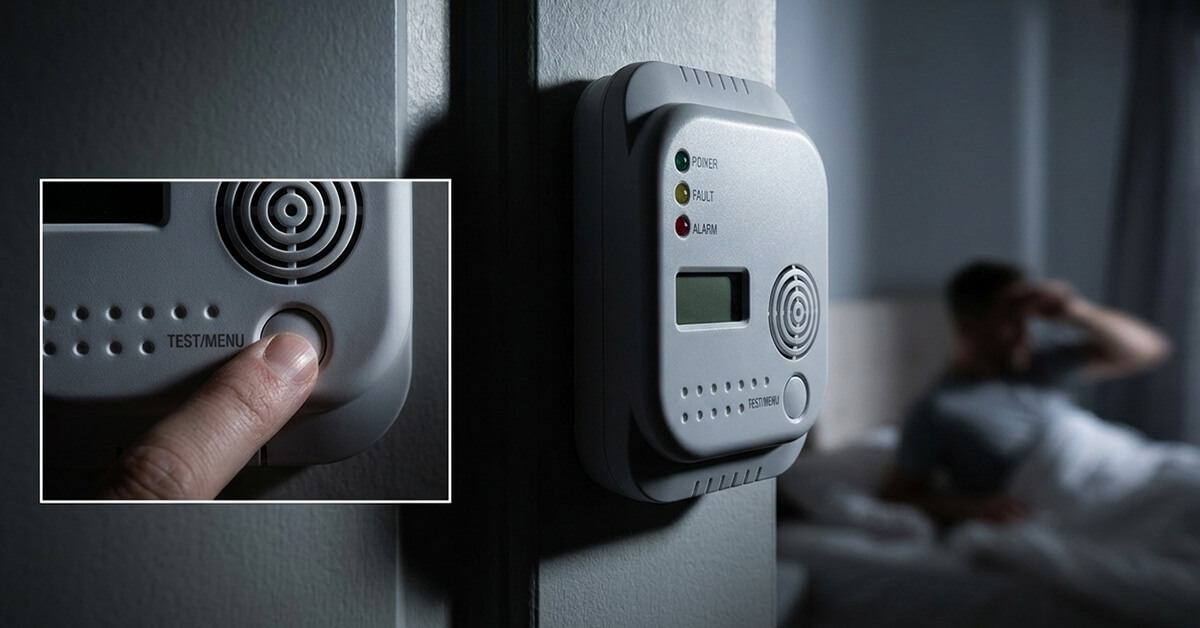
Margaret tested it using the built-in test button on the front of the unit (something the instructions recommend doing once a month). The sound made her jump, and her cat disappeared behind the sofa for 20 minutes. But it gave her confidence. The device worked. It was loud. And it was ready.
There's also a low battery warning, so the AirWatch will tell you before it ever runs out of power. And when the 7-year sensor eventually reaches the end of its life, it signals that too — no chance of it quietly going dead without anyone noticing.
Margaret put it simply: "It tells me when something's wrong. It tells me when it needs a new battery. And it tells me when it's time to replace it. I don't have to remember a thing."
No Wires, No Drilling, No Asking Someone To Come Round And Fit It
This was the part Margaret was dreading. She'd assumed anything safety-related on the wall meant an electrician, a drill, and a morning of disruption.
The AirWatch arrived in a compact box with everything included. It's completely wireless — powered by a replaceable battery that comes fitted. Mounting it took less than 10 minutes. The instructions were clear, with large text and diagrams. It attaches to the wall surface without any wiring.
The recommended position is about 1.5 metres from the floor and roughly 1.85 metres from any gas appliance like a boiler or oven. Margaret mounted hers in the hallway between the kitchen and the boiler cupboard. She did it herself, on a Wednesday afternoon, without calling anyone.
"If I can do it at 74," she said, "anyone can."
The AirWatch carries the LPCB quality mark — an independent certification that means it's been tested and verified to perform to recognised safety standards. It's not a gadget. It's a certified safety device that happens to be remarkably simple to install and use.
It works in houses, flats, bungalows, offices, caravans, and mobile homes. Anywhere there's a fuel-burning appliance and someone breathing the air around it.
What Margaret's Engineer Said When He Came Back The Following Year
Twelve months later, the same engineer returned for the annual boiler service. He noticed the AirWatch on the wall before he even opened his toolbox.
"Good," he said. "That's a proper one. Shows you the levels, doesn't it?"
Margaret nodded. She told him she checks the display every morning when she walks to the kitchen. She presses the test button on the first of each month. The battery warning hasn't come on yet. The readings have been consistently safe.
"Best thing is," she told him, "I don't lie awake wondering anymore."
The engineer smiled. "That's exactly the point."
Margaret has since bought 2 more — one for her daughter's home and one for the caravan her brother keeps in Wales. She told all 3 of her neighbours. Two of them ordered the same week.
48,000 customers across the country have made the same decision. And 1,840 verified reviews confirm what Margaret discovered for herself: once you can see that your air is safe, you never want to go back to guessing.

Right Now, The AirWatch Is Available At Half Price — But Not For Long
For anyone reading this who just had their boiler serviced, or who heats their home with gas, or who simply realised — like Margaret — that they've never actually owned a carbon monoxide alarm, this is the moment to act.
The AirWatch is currently available at a special introductory offer of 50% off for first-time buyers. No codes to enter, no complicated steps. The discount is applied automatically.
Every order ships within 24 hours and arrives straight to your door. And if for any reason it's not what you expected, there's a 30-day money-back guarantee — no questions asked, no forms, no hassle.
This offer is available while stock lasts, and at this price, units are moving quickly.
Margaret waited 41 years. She'd tell you herself — don't wait another week.
→ [Click here to claim your 50% discount on the AirWatch today]
30-day money-back guarantee · Ships within 24 hours · Secure, encrypted checkout
Click the link above to see if AirWatch is still offering a 50% off discount.